Neutral versus Regional Spanish
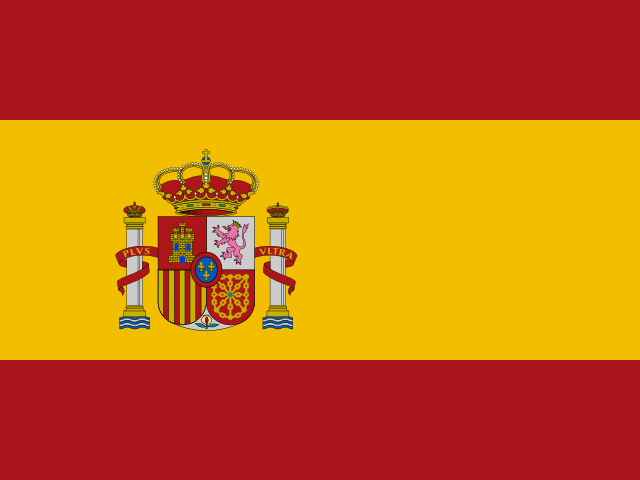
In Spain, Castilian (Castellano) is the official language, alongside regional languages such as Catalan, Galician, and Basque. For a broad audience, use neutral Castilian. However, if targeting Catalonia, Galicia, or the Basque Country, localizing into the respective regional language can increase user engagement. Note that many Spaniards are bilingual but have a preference for their regional language. Test your content with native speakers from different regions to avoid misunderstandings.
Differences from Latin American Spanish
The Spanish spoken in Spain differs significantly from Latin American variants, for example in vocabulary, grammar, and pronunciation. While in Latin America 'Usted' and certain past tenses are often preferred, in Spain the informal 'Tú' and the Pretérito Perfecto are common. Words like 'Coche' (car) or 'Ordenador' (computer) are typical in Spain, whereas in Latin America 'Auto' and 'Computadora' are more common. Adapting to local conventions is essential to avoid appearing unprofessional.
Google dominates the search market
Google is by far the most widely used search engine in Spain and crucial for your website’s visibility. Localized search engine optimization is therefore essential. Use regional keywords including Spanish terms and consider the country-specific domain setting (e.g., .es or .com). Additionally, local backlinks from Spanish websites and setting up a Google Business Profile can boost your local visibility.
Trust signals for Spanish users
Spanish internet users prioritize website trustworthiness. This comprises an imprint with a local address, a privacy policy, and recognized seals such as AENOR certification. Customer reviews and testimonials from Spanish users enhance credibility. Ensure a professional design and avoid unnecessary foreign terms. Payment options should include local methods such as Bizum or credit cards.
GDPR and data protection in Spain
The General Data Protection Regulation (GDPR) applies throughout the EU and thus also in Spain. National supplements are set out in the Spanish Data Protection Law (LOPDGDD) together with the supervisory authority AEPD. Ensure compliant consent notices, cookie banners, and a localized privacy policy. This section is not legal advice but provides an overview. For legally binding information, consult a legal expert.