






















2026-07-21 · Baduno Editorial Team · 28 Min. reading time · Blog & Knowledge
Localizing Chatbots and AI Assistants for European Customer Service
Learn how to optimally localize chatbots and AI assistants for European customer service. From linguistic diversity to cultural nuances to GDPR – this guide provides practical strategies and checklists for success in all 24 EU languages.
Fundamentals of Chatbot Localization for the EU Market
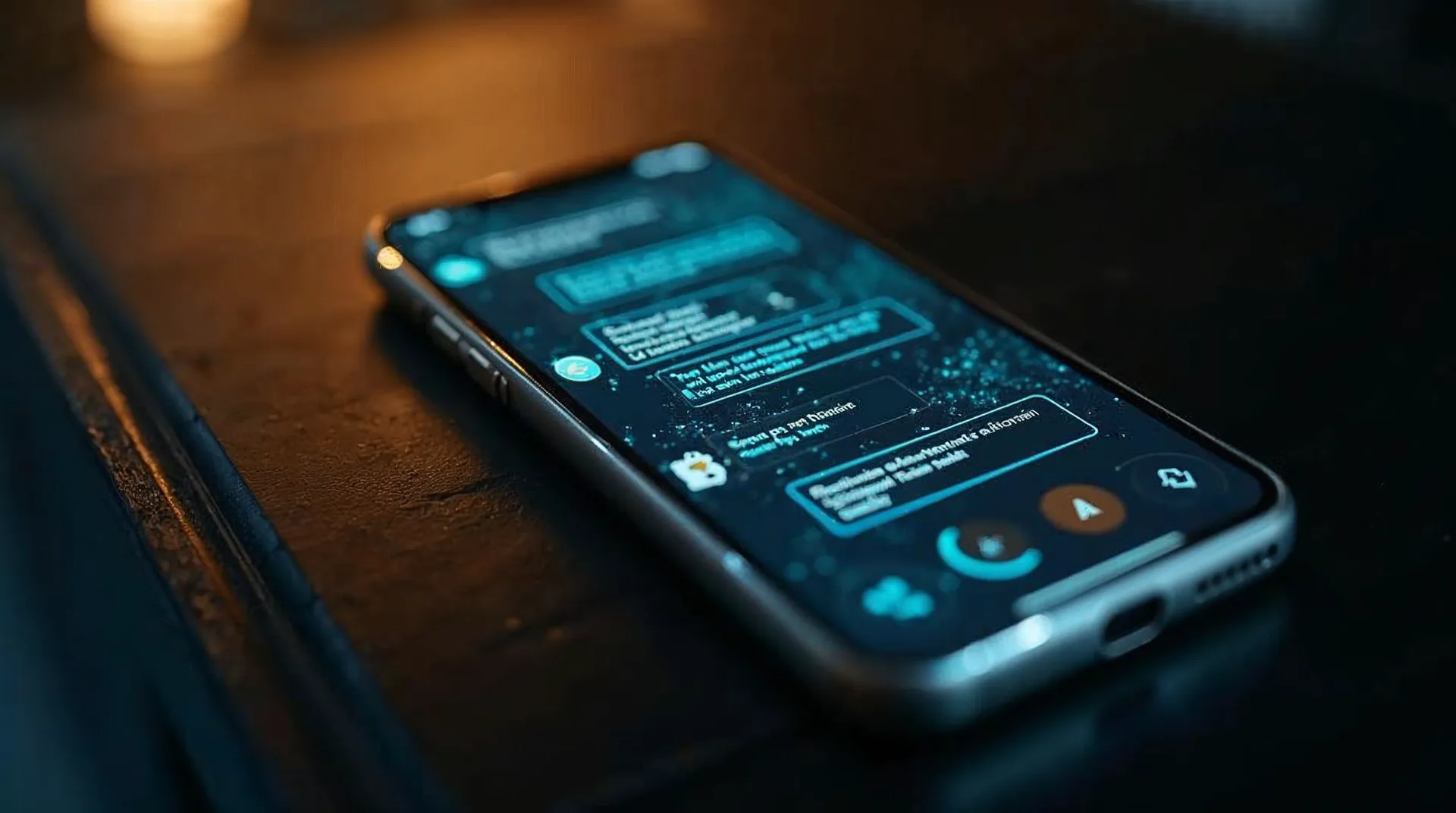
Localizing a chatbot for the European market involves more than just translating dialogues. You must consider the linguistic, cultural, and legal requirements of all EU member states. Since your chatbot is intended to be available in 24 official languages, the scalability of the localization process is paramount. A key step is creating a multilingual intent model. Instead of defining separate intents for each language, it is advisable to develop a language-independent model based on concepts. The actual utterances and responses are then stored language-specifically.
In linguistic adaptation, two aspects play a special role: grammar and tone. Many EU languages have formal and informal forms of address (e.g., "Sie" vs. "Du" in German, "vous" vs. "tu" in French). Your chatbot must choose the appropriate form depending on context and customer type. Moreover, expectations of friendliness vary: While direct, factual communication is appreciated in Scandinavian countries, customers in Southern Europe often expect a more personal, empathetic approach. For each language, we recommend creating a style guide that captures these nuances.
The legal requirements in the EU should not be underestimated. The General Data Protection Regulation (GDPR) requires transparency about data processing. Your chatbot must indicate at the start of the conversation that it is an AI assistant and clearly communicate the use of personal data. In some countries, industry-specific regulations must also be observed (e.g., in finance or healthcare). Seek legal advice on this matter. Another point is accessibility: The chatbot should be able to seamlessly hand over to a human agent for complex issues without the customer having to repeat data.
Recommended action: Start with a pilot localization for three to five languages covering different language families (e.g., German, French, Polish, Swedish, Greek). Test the dialogues with native speakers in target markets and conduct A/B tests to measure acceptance. Document all cultural specifics in a central knowledge database. This ensures that the chatbot acts consistently yet locally appropriate in all 24 languages.
Linguistic Diversity and Nuances in 24 EU Languages
The linguistic diversity of the EU includes not only 24 official languages but also numerous regional variants and dialects. For chatbot localization, this means you must make decisions about standardization. Typically, you use the respective standard language (e.g., standard German, French from France, European Portuguese). Nevertheless, nuances arise that affect customer service. For instance, German distinguishes between the formal "Sie" and the informal "Du" address. In many online contexts, the informal address has become established, but in customer service, the formal form is often more appropriate. Polish distinguishes between "Pan"/"Pani" (formal) and "ty" (informal) – here, correct address is essential for customer perception.
Another example is greeting phrases. While in Italian a casual "Ciao" is accepted in certain contexts, customers in Germany tend to expect "Guten Tag." The use of emojis also varies: in Southern European countries, they are used more frequently and expressively, while in Nordic countries they are used sparingly. Your chatbot should consider these expectations without seeming intrusive or inappropriate. A helpful tool is a language-specific glossary that documents all defined terms, phrases, and their translations. This prevents inconsistencies when multiple translators work on different languages.
Challenges arise especially when translating idiomatic expressions or wordplay. A sentence like "I am happy to help you further" can be directly translated into many languages, but "We will take care of it" can express different nuances of commitment depending on the language. Have such phrases reviewed by native speakers who also understand the cultural context. Additionally, for technical terms like "delete account" or "cancel order," ensure that the translation is unambiguous – in German, compound nouns like "Accountlöschung" are common, while English tends to use "delete account."
Recommendation: Invest in a Translation Management System (TMS) that provides translation memories and terminology databases. Define a fixed point of contact for each language to perform final quality assurance. Conduct regular language tests with real customers to gather feedback. During implementation, ensure that the chatbot dynamically switches to the user's language – ideally based on the browser language or a manual selection. Avoid automatic language detection from the IP address, as this can lead to errors in multilingual countries like Belgium.

Cultural Expectations for Customer Service Communication
Cultural expectations for customer service vary significantly within the EU and influence how customers perceive communication with a chatbot. In Northern Europe (e.g., Sweden, Finland), efficiency is paramount: customers expect short, precise answers without unnecessary pleasantries. A chatbot that gets straight to the solution is viewed positively. In Southern Europe (e.g., Italy, Spain), however, customers value personal address and empathy. Here, the chatbot should use polite introductory phrases and show understanding of the concern before moving to the solution. Expectations regarding response time can also differ: while in Germany an immediate response is expected, customers in France are more accepting of short waits if the service feels personal.
Another cultural aspect is the handling of errors and complaints. In some countries, it is common for customers to first express their frustration before getting to the actual problem. Your chatbot should be able to recognize emotional expressions and respond appropriately – for instance, with an apologetic phrase and assurance to solve the issue. In other cultures, complaints are made more matter-of-factly; here, an overly apologetic tone would be inappropriate. Good training of the intent model on negative emotions helps to dynamically adjust the tone.
Legal requirements for transparency of AI assistants are cross-cultural, but acceptance of AI in customer service varies. In Scandinavian countries, openness to technology is higher, while in Southern European countries, some customers are more skeptical. Therefore, you should introduce the chatbot as an AI assistant at the beginning and make it clear that a human agent is available if needed. In many languages, it is also customary to add a personal touch (e.g., the chatbot's name). Ensure that this name is neutral and positively connoted in all languages.
Recommendation: For each target culture, create a checklist of cultural features (e.g., Hofstede dimensions: individualism vs. collectivism, uncertainty avoidance). Adapt the chatbot's tone accordingly: for individualistic cultures (Northern Europe), rather factual; for collectivist cultures (Southern Europe), rather relationship-oriented. Test the dialogues with local test subjects and capture qualitative feedback on the appropriateness of the communication. Document the findings in a cultural style guide that is regularly updated. This ensures that the chatbot operates not only linguistically correct but also culturally appropriate.
Legal Framework: GDPR and Consumer Protection
Localizing chatbots for the European market requires accounting for strict data protection and consumer protection regulations. The GDPR (General Data Protection Regulation) applies to all EU member states and imposes high demands on the processing of personal data. Chatbots must implement the principles of "Privacy by Design" and "Privacy by Default" already in the dialog design. Specifically, this means: collect only data that is essential for the respective service request, and inform users transparently about data usage. In every dialog, you must offer a clear opt-out option for tracking or data storage, ideally at the beginning of the interaction.
In addition to the GDPR, country-specific consumer protection laws come into play. In Germany, for example, the information obligations according to § 312i BGB for digital services are relevant; in France, the Code de la consommation requires particularly clear information about contractual terms. For chatbot dialogs, this means you must always integrate an imprint with all mandatory information for business transactions or bookings. Also ensure the correct presentation of withdrawal rights, especially for paid offers. A localization professional should map these legal differences in the dialog specifications, for example through localized explanatory texts that vary by language and country.
Practical recommendation: Have each localized dialog component reviewed by a legal expert in the target country before deploying the chatbot. Do not store chat logs longer than necessary – the GDPR prescribes a storage limitation. Use a consent banner at the start of the chat tailored to the respective legal framework. Keep in mind that the EU ePrivacy Regulation may also come into effect – you should monitor current developments. Careful documentation of data processing processes is not only legally required but also builds customer trust. This legal framework should be firmly anchored in your localization workflow, supplemented by regular updates in case of legal changes.
Multilingual Dialog Specification and Intent Recognition
Multilingual intent recognition is the core of a localized chatbot. An intent describes the user's goal, such as "return a product" or "ask for opening hours." In localization, it is not just about translation but about adapting training data to the linguistic and cultural customs of each target country. Create separate training sets for each target language that cover typical expressions from that region. In Spanish, for example, you would use "quiero devolver un producto," while in Italian, "vorrei restituire un prodotto" takes politeness into account. Intent recognition should also tolerate dialectal variations and regional terms – for instance, "Handy" vs. "Smartphone" in German.
In dialog specification, you define the flow of the conversation, including error handling and response logic. Multilingual means you must formulate locally adapted phrases for each dialog path. For instance, French people often use more formal greetings in customer service than the Dutch. A "Bonjour, comment puis-je vous aider?" works for France, while in the Netherlands a more direct "Hallo, waarmee kan ik u helpen?" is common. The dialog structure itself must be flexible: in some cultures, a step-by-step, explanatory approach is desired; in others, a short, goal-oriented interaction. Develop modular dialog components that can be recombined depending on the language.
For practical implementation, we recommend building a multilingual intents library that is continuously expanded with real chat logs. Use an AI intent recognition tool that natively supports multiple languages, and conduct separate tests with native speakers for each language. Pay attention to so-called "fallback intents": formulate neutral responses when the chatbot does not recognize a request. These should be culturally sensitive – for example, a polite request for repetition without frustrating the user. Test the dialogs in all 24 EU languages with representative user groups to identify weak points in intent recognition. Regular monitoring and retraining are therefore essential.
Translation Strategies: Machine, Hybrid, or Manual
The choice of translation strategy for chatbot dialogues depends heavily on the desired quality, budget, and time. Machine translation (NMT) is cost-effective and fast, but often reaches its limits with nuanced dialogues. For example, a sentence like "Das muss ich mir notieren" can be translated as "I need to write that down" or "I have to note that" depending on the context. Here, pure machine output often requires post-editing. For simple FAQ dialogues with standardized phrases, machine translation can suffice if quality is supported by glossaries and terminology databases.
Hybrid approaches combine machine pre-translation with manual review by native speakers. At Baduno GmbH, we rely on AI-powered initial translation, which is then edited by experienced linguists for each target language. This ensures that cultural nuances and legal requirements are correctly embedded. A concrete approach: first translate the intent phrases and response modules automatically, then have a native speaker check the tone, levels of politeness, and technical accuracy. For brand-specific dialogues, such as those for premium brands, fully manual translation is recommended as it offers the greatest authenticity.
Practical recommendations: Create a style guide for each language that defines tone (formal vs. informal), forms of address, and prohibited terms. Use translation memories to ensure consistent translations across all dialogue modules. For the 24 EU languages, an iterative process is advisable: start with a pilot language, evaluate quality, and transfer the learned system to the other languages. Avoid fully automatic translations without human quality control, as errors in chatbots can quickly undermine customer trust. Also consider regular updates: chatbot dialogues should be reviewed with every update. A hybrid strategy offers the best balance of effort and quality.

Localizing Greetings, Politeness Forms, and Closings
Localizing greetings, politeness forms, and closings in chatbots requires a precise understanding of cultural norms in each EU country. While a simple "Hello" or "Hi" is common in English-speaking regions, users in German-speaking countries often expect a more formal address such as "Guten Tag" or "Sehr geehrte/r." In Southern European countries like Italy or Spain, warm, personal greetings like "Buongiorno" or "Buenos días" are standard. For closings, formulas vary: in German, "Mit freundlichen Grüßen" or "Vielen Dank und einen schönen Tag" are typical, while in French, "Cordialement" or "Bonne journée" are appropriate. Recommendation: Create a guide for each target language with expected levels of politeness and typical phrases, tailored to the context (first contact vs. returning user).
In practice, develop multiple greeting variants for each language—depending on time of day, occasion, and customer segment. A chatbot for the Nordic market (e.g., Sweden, Denmark) can be more direct, while in Poland or the Czech Republic, formal address with titles and last names is common. Also pay attention to regional differences: in Belgium, politeness varies by language community (Flemish vs. French). Test your dialogues with native speakers to check acceptance. Legal note: If personal data is used in greetings (e.g., addressing by name), GDPR-compliant consent must be obtained; have this reviewed by your legal department.
Concrete steps: Define a list of 5–10 greeting and closing patterns for each language. Implement logic that automatically selects the appropriate variant based on time of day and customer recognition. Example: A Spanish customer in the morning receives "¡Buenos días! ¿En qué puedo ayudarle?", in the afternoon "Buenas tardes." For closings, the bot should always maintain a friendly but professional tone – avoid overly personal formulations like "Hablamos pronto" (we'll talk soon) if no follow-up is scheduled. Document all changes and conduct regular A/B tests to measure conversion rates.
Adapting to Formal and Informal Address (Du/Sie)
The distinction between formal and informal address is a central element of communication in many EU languages. In German, we differentiate between "Du" and "Sie", in French "tu" and "vous", in Spanish "tú" and "usted", in Italian "tu" and "Lei". The choice depends on the context, the relationship with the customer, and the expectations of the target audience. A chatbot for customer service should use the formal address by default, unless the customer explicitly offers the informal "you" or the service is clearly informal (e.g., for younger audiences). Recommendation: Implement logic that derives the initial address style from customer history or asks the customer directly for their preference (e.g., "May we address you informally?").
In Scandinavian countries such as Sweden, Norway, or Denmark, however, the informal address ("du") is common in customer service, even without prior agreement. In Dutch, "je" (informal) is often used, while "u" (formal) appears more in official correspondence. The challenge is to maintain consistent address throughout the entire dialogue and not to mix them during language switches. Test your dialogues with native speakers of the target language to check whether the address sounds natural. A common mistake is switching from "Sie" (German) to "Sie" (English) in English systems – which can have incorrect connotations in German. Consult native speakers to determine which form is appropriate for your product.
In practice, this means: Define a variable for the address form (formal/informal) for each language. This variable controls pronouns, verb endings, and politeness phrases. Example: In German, the sentence "Wie kann ich Ihnen helfen?" (formal) vs. "Wie kann ich dir helfen?" (informal). In Polish, the differences are even more pronounced: "Pan/Pani" (formal) vs. "ty" (informal). Offer customers the option to choose the address when registering and save this preference. For existing customers, you can adopt the address from previous interactions. Legal notice: When storing address preferences, GDPR rules on data minimization apply; store only what is necessary and have legal compliance checked.
Dealing with Humor, Irony, and Cultural References
Humor, irony, and cultural references are particularly delicate in chatbots, as they are highly context-dependent and interpreted differently across cultures. What is considered a harmless joke in Germany may be perceived as rude in France, and irony is often not understood or seen as passive-aggressive in many Eastern European countries. A general recommendation: Avoid humor in standardized customer service chatbots unless you have explicitly established a friendly and casual brand personality. Even then, all humorous elements should be checked for cultural appropriateness by native speakers. Recommendation: For each language, develop a list of acceptable forms of humor (e.g., wordplay that works) and stick to clear, positive phrasing without sarcasm.
Irony is especially problematic because it often relies on tone of voice or facial expressions – both of which are missing in text chats. An ironic sentence like "Great, we've got another problem" is taken literally in many cultures and can cause confusion or annoyance. It is better to communicate directly and appreciatively: "I understand this is frustrating. I'm happy to help you." Cultural references (e.g., to local festivals, sports events, or celebrities) can strengthen engagement but carry the risk that not all customers will understand them. Only use such references if you know your target audience well (e.g., regional adaptation for the German-speaking market with references to Oktoberfest or Carnival). Test each reference with a representative user group.
Practical example: A chatbot for an airline might congratulate Spanish customers on the Feria de Abril but not use this greeting for German customers. Define conditional content: Only if the customer comes from a specific region and the corresponding event is active, the reference is displayed. Avoid political or religious allusions and stereotypes. Document all cultural adaptations and conduct regular audits. If a customer reacts negatively to humor, the bot should immediately switch to a neutral, service-oriented tone. Legal notice: When using personal data to determine location for cultural references, you must comply with the GDPR; obtain consent if necessary and have the use of location data legally reviewed.
Learn how to optimally localize chatbots and AI assistants for European customer service. From linguistic diversity to cultural nuances to GDPR – this guide provides practical strategies and checklists for success in all 24 EU languages.
Testing Methods for Multilingual Chatbots
Quality assurance for a multilingual chatbot requires more than just translating content. A multi-stage testing process that includes both automated and manual checks has proven effective. Start with a functional test in each language: verify that all intents are correctly recognized, dialogue flows are logical, and responses are grammatically and orthographically flawless. Use test scripts that represent typical customer inquiries in each target language. A practical approach is to create at least 50 test cases per language covering all relevant usage scenarios.
After the functional test, follow with a cultural fit test. Have native speakers from each target country test the chatbot. Pay attention to culturally appropriate forms of politeness, correct address (formal/informal), and avoidance of taboo topics. In practice, it has proven useful to include testers from different age groups and regions, as language habits can vary within a country. Document all anomalies and prioritize corrections by severity – from blocking errors to stylistic optimizations.
Another important step is regression testing after each adjustment. Run automated tests to ensure that changes in one language do not negatively impact other languages. Use a test management tool that logs results per language. Also plan regular spot checks by native-speaking editors, especially after updates to the AI models. A quarterly audit is recommended, reviewing dialogue quality based on real user interactions.
Specific recommendation: Develop a standardized test catalog with checklists for each language. Train your testers to distinguish between translation errors and cultural misunderstandings. Use an automated testing tool like Selenium or Zypher that supports multilingual test runs. Finally, conduct a usability test with real end customers – in practice, these tests often reveal the most relevant optimization potential.

Error handling and fallback strategies in all languages
A chatbot that is not understood must be able to react gracefully. Fallback strategies are therefore essential for a positive user experience. Define at least three escalation levels for each language: for low uncertainty, a follow-up question ("Could you clarify that?"), for medium uncertainty, a list of alternatives ("Did you mean...?"), and for non-recognition, handover to a human agent. It is important that the fallback texts sound natural in each language and not like a technical error message.
Developing language-specific fallback phrases requires native-speaker expertise. Avoid literal translations of standard German phrases like "Sorry, I didn't understand you," as these may be perceived as rude in other cultures. In Scandinavian countries, a direct but friendly follow-up is common, while in Southern European countries, an apologetic phrase is often used first. Test the acceptance of fallback phrases in each language with users from the target region.
Another critical point is handling spelling mistakes, dialects, or grammatically incorrect inputs. Use fuzzy matching and synonym-based expansions in each language. In practice, it shows that for languages with many verb forms (e.g., German, French), a morphological stemmer helps, while for analytic languages (e.g., English, Dutch), simpler methods suffice. Implement cross-language logging to identify common recognition errors and expand training data accordingly.
Specific recommendation: Define separate fallback phrases for each language and have them reviewed by native speakers. Set up monitoring that tracks the recognition rate per language and alerts when it falls below 80%. Plan monthly reviews of fallback logs to identify recurring patterns. Train your customer service staff, who take over on escalation, in the respective language and culture – in practice, this significantly improves handover quality.
Continuous optimization through user feedback
A chatbot is not a static product but thrives on continuous improvement. User feedback is the most valuable source for optimization. Implement the ability to rate the chat (e.g., thumbs up/down) after each interaction and allow users to leave free-text comments. Ensure that the feedback question is culturally appropriate in every language – in some countries, direct ratings are uncommon; here, an indirect question ("Was this answer helpful?") may work better.
Analyze feedback systematically by language. In practice, a weekly evaluation of the top 10 issues per language is recommended. Use a dashboard that displays metrics such as resolution rate, average response time, and escalation rate for each language. Correlate feedback with chat logs to understand which intents or dialog paths need improvement. An iterative approach: implement changes in small cycles (e.g., every two weeks) and measure the impact.
In addition to explicit feedback, you can also leverage implicit signals: repeated follow-up questions, abandonment of the interaction, or switching to live chat indicate comprehension issues. Train your AI model with these negative examples to sharpen intent recognition. Ensure training data is representative for each language – in practice, it is often sufficient to collect and annotate the top 100 unresolved queries per language each month.
Concrete action recommendation: Establish a rule-based feedback loop: Collect → Analyze → Prioritize → Adapt → Test. Assign a responsible person for each language to manage feedback evaluation. Use A/B tests to validate optimizations in one language before rolling them out. Train your team in handling multilingual data and encourage regular language audits. Remember: the work does not end after launch – continuous optimization is the key to a chatbot that excels in all 24 EU languages.
Checklist for the EU-Wide Chatbot Launch
A successful EU-wide chatbot launch requires systematic preparation that goes beyond mere translation. The following checklist helps you consider all relevant aspects.
1. Linguistic and Cultural Preparation: Define formal and informal address forms for each target language (e.g., in German “Sie” vs. “Du”, in French “vous” vs. “tu”). Check whether your chatbot automatically selects the correct form based on context or customer segment. Pay attention to regional variants: In Spanish, Castilian and Latin American Spanish differ in vocabulary and politeness conventions. Create a glossary for each language with key terms and establish binding translations – for example, for “account”, “order”, or “help”. This prevents inconsistencies. Legally, the GDPR is binding for all EU countries, but national interpretations may vary. Have your dialogues reviewed by legal counsel for consumer protection guidelines, especially in countries with strict requirements like Germany or France.
2. Technical and Content Safeguards: Test intent recognition with native speakers. A typical error source: the English term “order” can mean “order” (purchase) or “arrangement”. Train your Natural Language Understanding (NLU) with real dialogues from the target market. Implement separate fallback strategies for each language in case the chatbot does not understand a query. Consider cultural differences: In southern EU countries, customers appreciate more personal address, while Scandinavian markets prefer direct and concise responses. Define escalation paths to human agents who are proficient in the respective language – ideally as native team members.
3. Quality Assurance and Continuous Improvement: Conduct a pilot run with a closed user group for each language before launch. Measure key figures such as first-contact resolution rate and customer satisfaction by country. Use feedback to adjust dialogues – for example, to uncover typical misunderstandings. Plan regular updates to integrate new products, legal changes, or seasonal events (e.g., holidays). In practice, it has proven effective to appoint a local “chatbot officer” for each language who continuously monitors quality and initiates improvements.
4. Legal and Organizational To-Dos: Ensure your chatbot transparently communicates its AI nature at the start of the interaction (e.g., “I am a virtual assistant”). The GDPR requires a clear privacy policy; embed it prominently. When collecting personal data (e.g., name, email), the user must actively consent (opt-in). Document processing activities. For cross-border services, a Data Protection Impact Assessment (DPIA) may be required. Seek legal advice on this.
Future Developments: Multilingual AI and Voice Assistants
The localization of chatbots and AI assistants will fundamentally change in the coming years. Key drivers are advances in large language models (LLMs) and the increasing prevalence of voice assistants. Companies that invest in multilingual AI today are laying the foundation for tomorrow.
1. Large Language Models as Game Changers: Models such as GPT-4 or European alternatives (e.g., Aleph Alpha) can generate context-dependent content in many languages. This partially eliminates the need for manual training of individual intents – the model understands queries in 24 EU languages without separate fine-tuning. However, this entails risks: control over tone, politeness, and legal boundaries is lost. In practice, hybrid approaches prove sensible: LLMs for natural dialogue management, but firmly defined rules for critical areas (data protection, compliance). Moreover, models must be compatible with European values such as non-discrimination and transparency. The EU AI Act will provide clear specifications here.
2. Voice Assistants for Customer Service: Voice-controlled assistants such as Alexa, Google Assistant, or industry-specific solutions are gaining importance. Localization then includes not only text but also speech synthesis, accents, and dialects. A French customer does not expect a northern German accent. Technically, “custom voices” are available in various EU languages, but emotional nuance (empathy, urgency) is difficult to translate. Additionally, voice assistants must function reliably in noisy environments (call centers, public spaces). This requires speech recognition systems that understand regional accents such as Bavarian or Sicilian. We recommend testing voice functions first in the largest EU markets (Germany, France, Italy, Spain) and measuring user acceptance.
3. Continuous Learning from User Data: Future systems will learn from interactions in real time without developers manually injecting new training data. However, this requires sensitive handling of user feedback and compliance with the GDPR. Anonymization and aggregation are mandatory. Systems that independently adapt new vocabulary or slang must be controlled: a lexicon with undesirable terms (insults, discriminatory language) should be stored in all languages. Regular audits by native-language reviewers remain indispensable.
4. EU-Wide Standards and Interoperability: The European Commission promotes initiatives such as “European Language Grid” and “ELRC” (European Language Resource Coordination) to bundle multilingual AI resources. Companies should use these to adapt their chatbots to standards. Furthermore, the use of open formats (e.g., RASA, Botpress) is becoming more important to avoid dependencies on individual vendors. Plan your architecture so that you can easily integrate new languages or channels (web, app, messenger, voice). The future belongs to omnichannel-capable, multilingual assistants that seamlessly switch between text and speech.
Pitfalls and Common Mistakes in Chatbot Localization
Localizing a chatbot for the European market involves several typical pitfalls that can jeopardize project success. One of the most common mistakes is the pure translation of the source dialogue without adapting to cultural conversation norms. For example, users in Scandinavia often expect direct, straightforward address, while in Southern Europe a friendly, personal tone is appreciated. Translating merely words results in unnatural phrasing that can be perceived as rude or robotic. Another pitfall is neglecting formal and informal address forms. In German, French, or Spanish, the choice of “Sie” or “Du” determines the entire dialogue design. If the chatbot is inconsistent – sometimes using formal, sometimes informal address – it appears uncertain and irritating. Equally problematic are unadjusted date, time, and number formats. An appointment written as “03/04/2025” in the English original will be interpreted as April 3 in Germany and March 4 in France. Without language-specific formatting, misunderstandings arise. Risks also lurk in intent recognition: synonyms, regional terms, or dialects are often not sufficiently captured by machine learning models. For instance, in Austria people say “Palatschinken”, in Germany “Pfannkuchen” – an assistant that only knows one term fails to recognize the other. It is advisable to use separate training data with country-specific variants for each language. Furthermore, the feedback system is often neglected. A chatbot that is not understood in a language must allow the user to report the problem and escalate to the next level – for example, a human agent. If this mechanism is missing, frustration arises. Finally, companies should also consider legal pitfalls: the GDPR requires chatbots to be transparent about whether they make automated decisions and how personal data is processed. A general privacy statement is not sufficient; the information must be clear and understandable in the respective local language. The mentioned points can be mitigated through a structured localization process with native-language testing and regular user surveys. Any deviations should be documented and reviewed with a legal advisor for local requirements. Only in this way can costly rework be avoided and customer trust maintained.
Practical Example: Step-by-Step Localization of a Customer Service Chatbot for Three EU Countries
Suppose an e-commerce company wants to expand its English-language customer service chatbot to French (France), German (Germany), and Dutch (Netherlands). The goal is to automate common inquiries such as order status, returns, and payment issues. The process can be divided into six phases. Phase 1: Analysis and Planning. First, the existing dialog flows are cataloged and the requirements for each language are defined. It must be clarified whether the salutation should be formal (Sie, vous, U) or informal (du, tu, je). In France and Germany, formal is standard; in the Netherlands, "je" (Sie) is often used in customer service, but "jij" (du) is increasingly common. The company decides to use formal uniformly for consistency. Phase 2: Preparation of Translation Materials. Each dialogue section is placed in a localization tool (e.g., Transifex or Lokalise) with context information (screenshot, expectations). Text lengths are specified since French often requires 30% more characters than German. Phase 3: Translation and Cultural Adaptation. Native-speaking translators receive the template and adapt not only the text but also examples and help instructions. For instance, "Please enter your order number" becomes "Veuillez saisir votre numéro de commande" in France and "Bitte geben Sie Ihre Bestellnummer ein" in Germany. Additionally, country-specific polite expressions are incorporated: In the Netherlands, "Bedankt voor uw bericht" suffices, while a longer thank-you formula is expected in France. Phase 4: Intent Training. Intents are enriched with 50–100 additional phrases per language. For the intent "Initiate Return," variants are collected: "Ich möchte etwas zurückschicken" (DE), "Je veux retourner un article" (FR), "Ik wil een artikel retourneren" (NL). Common spelling mistakes are also integrated. Phase 5: Testing and Correction. The localized chatbot is tested with real users in each language. 100 typical dialogues are simulated and the recognition rate (pass/fail) is measured. Deviations are documented and dialog flows adjusted. A common mistake: the French version requires a phone number in the format 01 23 45 67 89, while the German version accepts 0123 4567890 – such formatting must be corrected. Phase 6: Rollout and Monitoring. After successful testing, the chatbot is deployed to live operation. Daily evaluations of user satisfaction (e.g., thumbs up/down) and escalation rate provide insights into optimization needs. After three months, a review is conducted to incorporate new user vocabulary. In practice, this approach brings customer satisfaction in the target countries close to that of the English original – without high follow-up costs.
FAQs
How do I handle the informal/formal address in different EU languages?
Address forms vary greatly: In German, one distinguishes between formal (Sie) and informal (Du), in French between vous and tu. For chatbots, an adaptive solution is recommended: Let the user choose their preferred address during the first interaction or derive it from context. Test acceptance in each country, as expectations differ by industry and target audience.
What legal pitfalls are there in chatbot localization in the EU?
In addition to the GDPR, you must consider country-specific consumer protection laws, for example regarding the obligation to provide information on automated decisions. In France, the use of AI in customer service is strictly regulated. Recommendation: Seek legal advice to ensure your chatbot is compliant in every EU country. Document all data processing processes and offer transparent opt-out options.
How do I effectively test a multilingual chatbot?
Conduct separate tests for each language: Native speakers should run through typical customer scenarios and check for comprehensibility, tone, and cultural appropriateness. Use A/B tests for different phrasing. Automated tests can validate intent recognition. Integrate user feedback directly via the chatbot to identify weaknesses. Plan multiple test iterations before going live.