

















2026-07-22 · Baduno Editorial Team · 30 Min. reading time · Blog & Knowledge
EU packaging regulations clearly translated: recycling instructions and environmental labels
The EU Packaging Regulation presents companies with new challenges: recycling instructions and environmental labels must be precisely translated into all target languages. Our guide shows how to avoid legal pitfalls, maintain consistent terminology, and optimize your packaging texts for international markets – practical and up to date.
EU Packaging Regulation and its Labeling Requirements
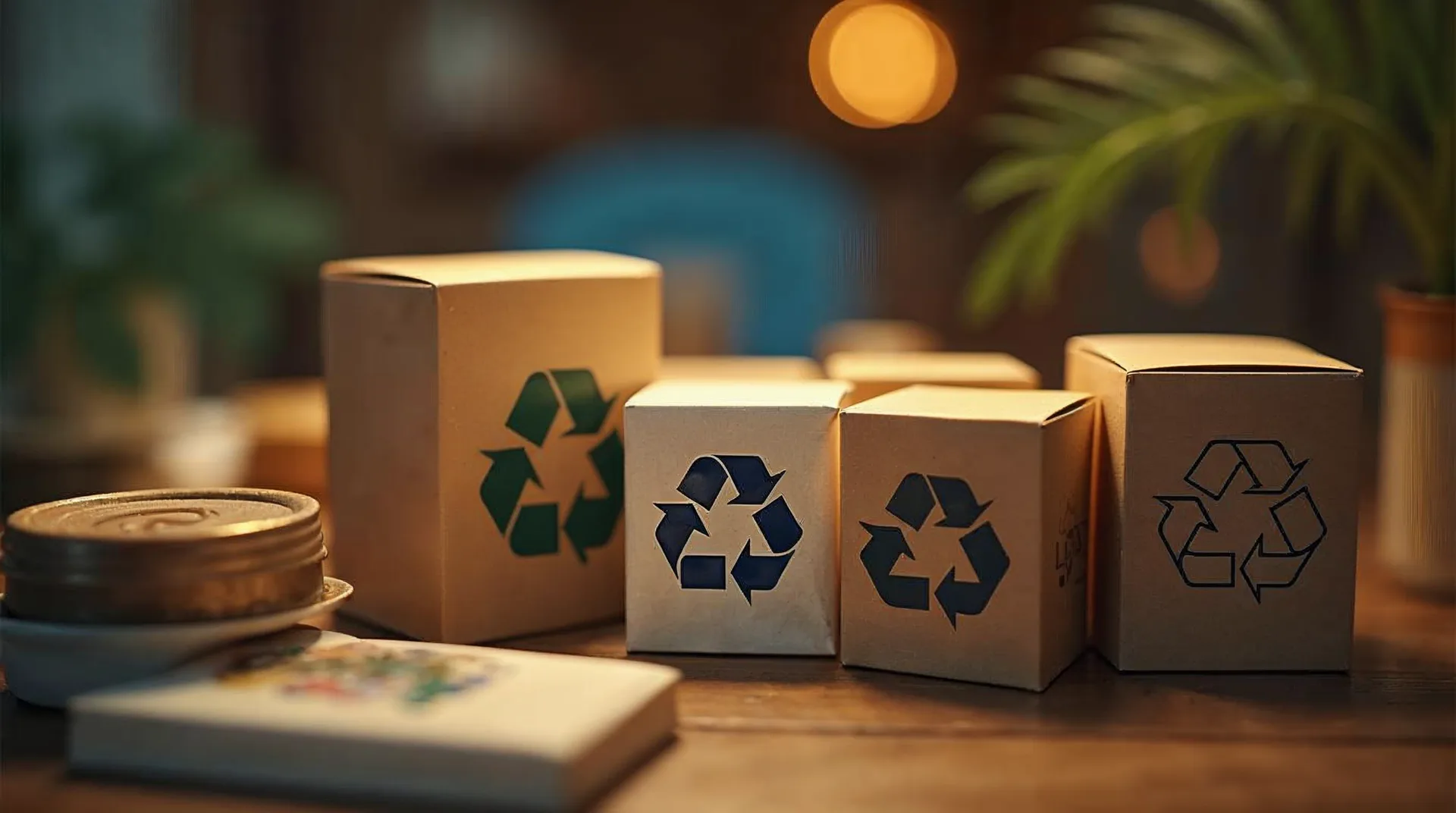
The EU Packaging Regulation (Regulation (EU) 2025/... entered into force) and the underlying Directive 94/62/EC establish binding labeling requirements for packaging. The aim is to increase recyclability and enable consumers to dispose of packaging in an informed manner. Key requirements include specifying the packaging material (e.g., plastic, paper, glass) and labeling with the corresponding recycling symbol according to EN 13430 or EN 13432. Additionally, manufacturers must provide a note on correct disposal (e.g., 'Packaging in the Yellow Bag'). These details must be provided in all EU languages in which the product is marketed.
In practice, this means that companies must check for each target market whether additional national requirements exist. Germany, for example, requires participation in the dual system, which necessitates labeling with the Green Dot or a licensing notice. France mandates the use of the Triman logo, combined with a text such as 'Le tri sélectif'. Italy requires the indication of material abbreviations according to Decision 97/129/EC. These country-specific regulations must be incorporated into the translation of recycling instructions.
A common mistake is the wholesale translation of a symbol without legal review. For example, the Green Dot may only be used if the manufacturer actually participates in the German licensing system. A mere translation of the term 'Green Dot' is not permitted. The same applies to the Mobius loop symbol: it may only be placed on recyclable packaging if the material type and local recycling possibilities support it. Recommendation: Create a list of required symbols and texts for each market and have it reviewed by a law firm specialized in packaging law.
Finally, labeling must be integrated into the packaging design so that it remains legible despite translation into 24 languages. A combination of standardized pictograms and short, language-neutral texts (e.g., material numbers) has proven effective. The translation of textual elements must accurately reflect the legal wording of the respective national implementation. Deviations can lead to fines or sales bans. We recommend having the translations validated by a legal review service in each target country.
Basics of Translating Recycling Instructions
Translating recycling instructions requires more than linguistic accuracy: It must take into account the technical, legal, and cultural conditions of each target market. A key component is material abbreviations such as PET, HDPE, PP, or PAP. These are generally standardized internationally (e.g., according to DIN 6120 or ISO 1043) and should not be translated but adopted as standardized codes. The situation is different for explanatory texts such as "Bottles and jars" or "Packaging 100% recyclable." Here, the correct language equivalents must be found that correspond to the local waste systems.
A practical example: The instruction "Empty the tin can after use and place it in the Yellow Bag" is clear for Germany but needs to be adapted for other countries. In Spain, the Yellow Bag is called "contenedor amarillo," in France "bac jaune," in Sweden "plastförpackningar" or "metallförpackningar" depending on the material. A literal translation would cause confusion. Instead, the waste disposal infrastructure of the country must be researched: What color are the containers? Which materials are collected together? The translation must follow these local conditions.
Furthermore, symbols such as the Green Dot, the Mobius Loop, or the Triman are not universally applicable. Each symbol has a specific legal meaning. For example, a Mobius Loop may only be used if the packaging is actually recyclable—not only from the material perspective but also regarding local recycling rates. Translating the symbol name (e.g., "Recyclable") is not sufficient; the correct pictogram with the applicable supplementary texts must be used. As a rule of thumb: Use symbols only if you have the license or permission for the corresponding market.
For practical implementation, we recommend creating a multilingual glossary with all relevant terms and their associated legal frameworks. Each term (e.g., "recyclable," "refillable," "deposit system") should be documented with its definition, the permitted symbol, and the exact wording in the target languages. Have this glossary reviewed by native speakers familiar with the waste management of the respective country. This is the only way to ensure that your recycling instructions are both legally compliant and consumer-friendly.
Legal Frameworks for Environmental Labels in the EU
Environmental labels in the EU are subject to strict legal requirements that must be observed during translation. Directive 2005/29/EC on Unfair Commercial Practices (UCPD) prohibits misleading environmental claims. Accordingly, an environmental label may only be used if the actual environmental benefits of the product compared to competing products can be demonstrated. Moreover, the Commission has tightened requirements with the proposal for a Green Claims Directive (2023): In the future, all environmental claims must be verified by independent third parties and calculated using standardized methods.
A particularly relevant label is the EU Ecolabel (Euroflower). It is an official quality mark of the EU and may only be used for products that meet the strict criteria of the respective product group. Translating the label—i.e., the designation "EU Umweltzeichen" into the national language—is legally unproblematic as long as the graphic representation is not altered. The situation is different for national labels such as the Blue Angel in Germany or the Nordic Swan in Scandinavia. These are trademark-protected and may only be used with permission. Translating the designation without the actual permission to use would be illegal.
In practical terms, this means: Environmental labels are never freely translatable. They must be used either in the original (e.g., "Der Blaue Engel" as a German brand name) or in the licensed form (for multilingual labels). For international distribution channels, it is advisable to rely on EU-harmonized labels such as the Euroflower or the Energy Label, as they are already translated into all official languages. For private labels (e.g., "Rainforest Alliance"), use is tied to license agreements that often prescribe the visual representation. A translation of the term must be coordinated with the label provider.
Finally, it should be noted that even self-declared environmental claims (e.g., "100% recyclable") are subject to the same strict rules. You should only translate such claims if the evidence is provided for all target markets. Have your translations of environmental labels and claims reviewed by a legal advisor specializing in unfair competition law (UWG), as penalties for greenwashing can be severe—in Germany up to €250,000 or more. We point out that this guide does not replace legal advice; consult an expert for your specific case.
Strategies for Localizing Ingredient Declarations
Localizing ingredient declarations on packaging requires more than a simple translation. You must consider the legal requirements of each target country, as names, permitted ingredients, and declaration obligations differ. For example, in the EU, cosmetic products must be declared according to INCI (International Nomenclature of Cosmetic Ingredients), while for food, the EU Food Information Regulation (LMIV) applies with allergen labeling. For detergents, Regulation (EC) No. 648/2004 on detergents stipulates certain types and quantities of surfactants.
To avoid errors, create a database of approved translations of ingredients in the 24 target languages for each product category. This database can be based on official sources such as the CosIng database for cosmetics or the EU Plant Protection Products Directory. Ensure that concentration indications (e.g., "<5%") are transferred correctly and in the local notation – in many countries, a comma is used instead of a period as a decimal separator.
In practice, it has proven useful to structure ingredient declarations in a two-column table: on the left the original text, on the right the target language equivalent. For each translation, note the applicable legal basis. Have such lists reviewed by a native speaker with a legal background who is familiar with the national implementations of EU directives. Example: The designation "preservative" must be rendered as "conservateur" in France and "conservante" in Italy, but in Austria and Germany it remains "Konservierungsstoff". For allergens such as "celery" or "mustard", specific translation requirements also apply.
Another aspect is placement: some countries require a minimum font size of 1.2 mm (e.g., for ingredients in food), while others accept smaller font sizes for international symbols. Therefore, plan sufficient space for long compounds – especially in languages such as Finnish or Hungarian, where words can become longer through compounding. Before printing, conduct a layout check scaling the translated text to the actual packaging size. If there are uncertainties regarding the legal interpretation of the regulation, we recommend consulting legal counsel specializing in product labeling.
Quality Assurance in the Translation of Packaging Texts
Quality assurance for translated packaging texts is a multi-stage process encompassing both linguistic and legal aspects. A four-eyes principle has proven effective: one translator creates the initial translation, a second native speaker checks it for accuracy, consistency, and target audience appropriateness. In parallel, a third person – ideally with a legal background – should verify compliance with relevant EU regulations. This separation of roles reduces the risk of errors remaining in the final version.
Use translation memory (TM) systems that store previously approved segments. This ensures that recurring phrases such as "Keep in original packaging" are translated consistently across all languages. Maintain glossaries of product-specific terms that all parties – translators, reviewers, and clients – approve before project start. For each country, define whether regional variants are used (e.g., "Verpackung" in Germany vs. "Packung" in Austria).
An often overlooked point is consistency between translation and graphic design. Check whether the length of the translated text fits into the intended layout. If cuts are necessary, the core statements must be preserved and the translation must not be misleading. For example, the phrase "Contains traces of nuts" must not be shortened to "Contains nuts", as this would imply a different allergenic meaning. Document every change in a change log and, for legally relevant cuts, obtain a new legal review.
Finally, we recommend producing a proof print before approval for print. Read the texts on the packaging under realistic conditions (e.g., different lighting) and have a native-speaking employee of the target market evaluate comprehensibility. Conduct a final checklist-based inspection that checks, among other things, the position of mandatory information and the legibility of font size. Note: Incorrect labeling can lead to warnings and sales bans. Professional quality assurance is therefore an investment that pays off in the long term.
Handling Symbols and Graphics in the Translation Process
Symbols and graphics on packaging do not need to be translated, but their meaning must be correctly understood in every target country. A universal symbol like the recycling triangle (Möbius strip) is the same in all 24 EU languages, yet supplementary numbers or letter abbreviations (e.g., 'PET 01') are usually uniform nationally. Nevertheless, you should check whether the symbol is actually internationally standardized or if regionally divergent variants exist. For example: The Green Dot symbol appears differently in some countries, and the symbol for 'Separate Collection' (wheelie bin with a cross) has a different meaning in Italy.
Create a symbol library for your company that lists each symbol used with its original source, meaning, and legal basis. Note whether the symbol is licensed (like the Green Dot) or freely usable. If you embed symbols into other graphics such as infographics, the associated texts must be translated. Ensure that the graphic has enough space for the localized label – especially in languages with long words like German or Dutch. Always have graphics adapted in the target format (e.g., AI, EPS) instead of merely scaling them to avoid distortion.
A common mistake is using symbols that are not known or are prohibited in certain EU countries. For example, the 'Recyclable' symbol may only be used if proof of recyclability is available. In France, the 'Triman' logo is also mandatory for all recyclable packaging. Check the national implementations of EU directives to see whether specific symbols are required (e.g., in Italy or Spain). We recommend seeking legal advice on country-specific symbol regulations before creating packaging graphics.
When integrating symbols into online manuals or labels, you must consider accessibility: Always provide an alternative text (alt text) describing the symbol's meaning. This alt text must be translated into all 24 languages. Test the graphics at different sizes and resolutions to ensure readability. Document all changes together with the translations so that consistency is maintained in reprints. A systematic process helps you avoid costly reprints and distribution delays.

Terminology Management for Consistent Recycling Instructions
Consistent translation of recycling instructions is crucial to inform consumers equally in all EU member states and ensure legal compliance. The foundation for this is systematic terminology work. Start by creating a multilingual glossary that includes all relevant terms for materials, disposal instructions, and symbols. For example, 'composite packaging' should be clearly defined in each target language to avoid misunderstandings during sorting. Use recognized sources such as EU Directive 94/62/EC and national implementations to find legally compliant equivalents.
It is advisable to set up a central terminology management system (TMS) accessible to all translators and reviewers. Tools like memoQ or SDL Trados offer integrated termbase functions. Define binding core terms and decide whether certain expressions should remain untranslated (e.g., 'Separate the components' as a standardized phrase). For recycling-related pictograms such as the Green Dot or the Möbius strip, you must check whether country-specific variants exist – in France, for instance, the 'Triman' logo must not be confused with the Green Dot.
When translating ingredient claims (e.g., '100% recyclable'), caution is required: Such statements are subject to strict EU regulations on environmental advertising. Work with a legal expert who reviews the latest requirements from the EU Commission and national case law. Document each decision with source references to prevent future liability issues. An iterative process with regular terminology updates ensures that changes in legislation or material composition are incorporated promptly.
Practical recommendation: Conduct a terminology kick-off meeting with all stakeholders before the first translation. Assign responsibility for maintaining the glossary (e.g., a terminologist or lead translator). Review the glossary semi-annually for currency. Test consistency by comparing samples from different product lines – ideally using a comparison tool that automatically detects deviations.
Tools and Resources for Efficient Translation Work
Translating EU packaging texts into 24 languages requires specialized software to ensure consistency and efficiency. Translation Management Systems (TMS) like Smartling or Phrase enable workflow automation—from source text extraction to delivery to individual countries. The integration of a Translation Memory (TM) is crucial: recurring phrases such as 'Protect from sunlight' or 'Recycling information' are automatically suggested, saving time and reducing errors. Ensure that your TM is linked to a terminology database to avoid discrepancies.
For the visual representation of symbols and graphics, use image libraries such as the vector graphics provided by the EU. Many environmental labels are available in CMYK versions that can be embedded in the target language. Tools like InDesign with multilingual placeholders make it easy to replace text in graphics without disrupting the layout. For automated translation of recurring content, rely on neural machine translation (NMT) followed by human review. Providers like DeepL or Google Cloud Translation can deliver raw translations, which are then proofread by a native speaker with linguistic and legal expertise.
A valuable resource is the EU-wide directory of national waste management authorities. Here you can find country-specific regulations on packaging labeling, such as whether the Green Dot is mandatory in a country or whether a specific symbol must be used. The EUR-Lex portal is also indispensable, providing all relevant directives and regulations in the 24 official languages. Additionally, utilize industry associations like IK Industrievereinigung Kunststoffverpackungen, which offer guidelines on recycling symbols.
Practical recommendation: Conduct a tool audit—check whether your current TMS meets the requirements for multilingualism, versioning, and legal compliance. Invest in training for your team, especially on setting up terminology workflows. Set up a dashboard report that transparently shows progress, translation costs, and error rates. Test the output in a pilot project for three languages before scaling to all 24.
Integration of SEO in Multilingual Packaging Texts
Packaging texts are now part of the online presence—whether on product pages, data sheets, or e-commerce communications. Therefore, SEO considerations should be incorporated into the translation from the start. Begin with a keyword analysis for each target market. For recycling instructions, terms like 'dispose of packaging' or 'recyclable packaging' are relevant search queries. Use tools like SEMrush or Ahrefs (without explicit mention in the result list) or conduct manual research using Google Suggest results from the target countries. Pay attention to regional differences: in Austria they say 'Verpackungsmüll', while in Germany it's more 'Verpackungsabfall'.
The translation must be search engine friendly without compromising legal accuracy. Avoid literal translations if they do not match the search intent. For example, the English sentence 'Recycle at your local facility' can be formulated in German as an SEO-optimized version 'So entsorgen Sie die Verpackung richtig', since users search for disposal instructions. Integrate keywords into headings (H1, H2), meta descriptions, and alt texts of graphics. This requires close collaboration between the translator and the SEO specialist, who provides the keyword list.
Technically relevant is the marking of multilingual content with hreflang tags so that search engines serve the correct language version. Packaging texts in PDFs are less relevant for SEO—therefore, provide the content as HTML pages. Use structured data (Schema.org) to mark recycling information as such. For example, you can use the 'Thing' ontology to mark disposal instructions, which can lead to rich snippets in search results. Test visibility with tools like Google Search Console to check whether the translations are indexed.
Practical recommendation: Create an SEO guide for your translation team with language-specific keyword corridors. Set maximum lengths for meta descriptions (approx. 160 characters). Conduct quarterly ranking monitoring for the most important search terms in the top 5 EU markets. Adjust your translations when trends deviate. Remember: SEO for packaging texts is an ongoing process that requires regular updates.
Practical Examples: Translating Typical Recycling Instructions
When translating recycling instructions on packaging, standardized phrases play a major role. A typical example is the note 'Recyclable – Please place in the yellow bag'. For the French market, this becomes 'Recyclable – À déposer dans le sac jaune'. It should be noted that the yellow bag is not used everywhere in France; in some regions, there are yellow bins. The wording should therefore be more neutral: 'Recyclable – À déposer dans le conteneur de tri correspondant'. Such nuances are crucial for comprehension.
Another example concerns the instruction 'Plastic bottle – Dispose of cap separately'. For Italy, this becomes 'Bottiglia in plastica – Smaltire il tappo separatamente'. However, Italian municipalities have different rules: some require the cap to remain on the bottle to facilitate recycling. The translation should therefore be aligned with local regulations. Precise research of municipal waste disposal guidelines is essential to avoid misinformation.
Packaging with the Green Dot is a well-known brand across Europe, yet it requires different translations. In Spain, 'Punto Verde' can be used, but in some regions an additional explanation is necessary because the symbol is not familiar to all consumers. A supplement such as '... represents' makes the meaning clearer. Conversely, in Germany, the mere depiction of the Green Dot is sufficient, as the system is widely known.
A common mistake is the literal translation of 'Tetra Pak' in recycling instructions. 'Cartons for liquids' should be neutrally translated as 'beverage carton', since Tetra Pak is a brand name. In Polish, it is correctly 'karton do napojów' instead of 'Tetra Pak'. All translations must also comply with EU Directive 94/62/EC and its national implementation. Therefore, always have your target texts reviewed by a legal expert familiar with local waste laws.

The EU Packaging Regulation presents companies with new challenges: recycling instructions and environmental labels must be precisely translated into all target languages. Our guide shows how to avoid legal pitfalls, maintain consistent terminology, and optimize your packaging texts for international markets – practical and up to date.
Pitfalls and Common Errors in Localization
A common mistake is assuming that recycling instructions can be translated identically across all EU countries. In fact, collection systems differ significantly even between neighboring countries. For example, in Dutch, the 'yellow bag' is called 'de gele zak' in Belgium, while in the Netherlands 'de plastic zak' or 'de PMD-zak' is common. Using the wrong term leads to confusion and incorrect disposal. Therefore, before translation, the specific local terms must be researched, ideally by native speakers with knowledge of waste management.
Another pitfall is false friends and literal translations. The German 'Wertstoff' is often rendered in English as 'recyclable material', but the term 'valuable material' is misleading. Similarly, prohibitions such as 'Do not dispose of in household waste' must be clearly formulated in all target languages. In French, 'Ne pas jeter dans les ordures ménagères' is correct, while 'Ne pas mettre à la poubelle' is too informal and inappropriate in official contexts.
Plural formation and gender assignment for container names also lead to errors. While in Germany, 'die Gelbe Tonne' (the yellow bin) and 'der Gelbe Sack' (the yellow bag) are clearly distinguished, in Danish there is only 'den gule pose' (bag) – a bin is referred to as 'container'. The translation must find the exact equivalent, otherwise misunderstandings about the disposal method arise. A typical mistake is to translate the German term with the same word in all languages, without considering local differentiation.
Finally, it is often overlooked that symbols and pictograms have different meanings in some countries. The Green Dot is known in many EU countries, but not all (e.g., barely in Croatia). A pure symbol sheet without text is then insufficient. Therefore, always add an explanatory description in the local language. Have the translated instructions reviewed by multiple native speakers before print approval, who are familiar not only with the language but also with local conditions.
Checklist for Reviewing Translated Recycling Labels
Commission a specialized translator with knowledge of waste management to conduct the final review of your translated recycling labels. Systematically go through the following points:
- Do the technical terms used match the official designations in national waste legislation? Check this against the relevant regulations (e.g., German Packaging Act, French Code de l'environnement). - Are all symbols and pictograms correctly labeled? The Green Dot, the recycling triangle, or the "Tidy Man" should always include an explanatory text in the local language. - Do the color codings correspond to local standards? Yellow stands for lightweight packaging in Germany, for plastics and metals in Austria, and for plastics only in Italy – incorrect color indications lead to wrong sorting. - Are all mandatory EU requirements (e.g., material identification according to Decision 97/129/EC) fully and correctly translated? The material numbers must not be altered.
Check reading direction and typography. Recycling instructions often appear in very small type sizes. Ensure that the translation is not longer than the original, otherwise it won't fit the designated layout. Shorten if necessary without distorting the meaning. Use abbreviations only if they are common in the country (e.g., "HDPE" instead of "High-Density-Polyethylene" in German).
Have the translation proofread by at least two independent native speakers. Ask them to assess comprehensibility for an average citizen and mark any cultural peculiarities. Compare the translation with the current disposal guidelines of the largest cities in the target country. An outdated reference can lead to fines. Document all changes in a change log.
Obtain legal clearance before printing, confirming that the translated labels comply with national and EU regulations. Keep this clearance for possible regulatory audits. Regular updates of the translations – at least once a year – ensure that changing recycling regulations are taken into account. For a professional implementation, we recommend working with a specialized service provider like Baduno GmbH.
Future Developments in EU Packaging Regulations
The European packaging landscape is undergoing a transformation. The revision of the Packaging and Packaging Waste Directive (PPWR) presented in November 2022 is expected to come into force gradually from 2025. A key element is binding recycling quotas for all packaging, set to increase to 70% by 2030. For your company, this means that recycling instructions must not only be linguistically correct but also precise in terms of recycling. The EU aims to harmonize symbols, so a uniform label could apply across all member states – for instance, an EU-wide recycling logo with material indication. In practice, this requires close collaboration with legal advisors to identify local deviations (e.g., the Triman requirement in France or environmental labeling obligations in Italy) in a timely manner.
Another trend is the digitalization of packaging information. The European Commission is evaluating whether QR codes or digital watermarks will be accepted as equivalent alternatives to printed labels in the future. Pilot projects like "HolyGrail 2.0" are testing digital product passports that enable waste sorting facilities to identify packaging materials. For translation, this means that in the future, you will need to localize not only static texts but also dynamic content for QR codes – such as links to recycling portals in the local language. Ensure that the embedded URLs are country-specific and that the target pages are available in the corresponding language.
Labeling of hazardous substances is also becoming stricter. The EU CLP Regulation (Classification, Labelling and Packaging) is expected to be extended to packaging of everyday products such as cleaning agents by 2025. Translations of hazard statements (H-phrases) and precautionary statements (P-phrases) must then be not only linguistically correct but also numerically identical – a common error in practice. Use terminology databases like the EU CLP Regulation itself to ensure consistent translations.
Recommendation for action: Plan now to switch to a modular translation system that allows you to centrally manage labels and automatically update them when regulations change. Conduct regular audits of your multilingual packaging, ideally with a lawyer specializing in EU packaging law. This is the only way to avoid warnings that can quickly lead to five-figure costs in practice.
Outlook: Sustainability and Consumer Communication
Consumers in the EU are placing increasing value on sustainable packaging and expect transparent information. According to a 2023 survey (source: EU Commission), 78% of Europeans are willing to pay more for products with environmentally friendly packaging – but only if the information is clear and verifiable. For the translation of environmental labels, this means that you must not only translate literally but also consider cultural expectations regarding sustainability. In Germany, the “Green Dot” plays a major role; in Scandinavia, the Nordic Ecolabel. The challenge: A label that is considered trustworthy in one country may be met with skepticism in another. In practice, it has proven effective to prioritize the relevant labels per country and place them prominently on the packaging.
A growing trend is the use of QR codes for detailed sustainability information. Instead of printing all environmental data on the packaging, brands refer to digital product passports that cover the entire lifecycle – from raw material extraction to disposal. Translating this content requires close coordination with sustainability departments, as technical terms such as “carbon footprint” or “life cycle assessment” may have country-specific definitions. For example, France and Belgium use different calculation methods for the carbon footprint. Recommendation: Have digital content reviewed by a sustainability communications expert to avoid accusations of greenwashing.
Consumer communication language is also changing. Moving away from passive formulations like “recyclable” toward active instructions: “Please dispose of this packaging in the yellow bag.” In multilingual projects, this tonality must be defined individually for each language. While the imperative is common in German, consumers in France prefer a more polite form (“Nous vous remercions de…”). Therefore, test your translated instructions in focus groups or with native speakers who understand the local sentiment.
In summary: The future of packaging communication lies in the combination of precise legal compliance and emotionally appealing sustainability messaging. Equip your translation team early with a glossary that includes both legal terminology and country-specific sustainability vocabulary. This ensures that your packaging is not only legally compliant but also customer-friendly.
Collaboration with Translation Service Providers and Cost Calculation
Selecting a suitable translation service provider for your packaging texts is a strategic step. Ensure that the provider has expertise in EU packaging regulations and experience with localizing recycling instructions. Ask for references from the packaging industry and check whether the provider offers quality management in accordance with ISO 17100 or similar standards. Close collaboration with your legal team is essential, as translations of environmental labels must meet legal requirements. Have your legal advisor confirm that the translated content complies with the national implementations of the EU directives.
Costs for translating packaging texts are composed of several factors: text volume, language combinations, urgency, and additional services such as terminology work or DTP adjustments. Experience shows that prices per word for specialized translations range from €0.15 to €0.35, depending on the language combination and complexity. For recurring content, you can negotiate volume agreements or framework contracts with your provider to achieve planning security. Also allocate a budget for a second, independent quality review, especially for initial translations or critical content. This avoids subsequent correction costs and risks from incorrect labeling.
An important aspect is setting up a terminology database that is maintained jointly with the service provider. This reduces long-term effort and ensures consistency across all packaging and languages. Agree on clear acceptance criteria, such as verification of compliance with relevant standards (e.g., DIN EN ISO 14021 for environmental labels). Integrating translation management systems (TMS) can also accelerate the process and reduce errors. An experienced provider will advise you in advance on potential pitfalls, such as different space constraints on packaging or country-specific symbol requirements. Allow sufficient time for onboarding and pilot projects to ensure quality before the rollout. Close, trusting collaboration with regular exchange is the key to legally compliant and consumer-friendly translations.
Common Objections from Companies and Their Solutions
Many companies hesitate to invest in professional translations of recycling instructions, often due to cost or time concerns. A common argument is: 'Machine translations are sufficient, especially for standardized symbols.' In practice, however, this leads to significant risks: automatically translated texts often contain errors in technical terminology or disregard country-specific regulations, which can result in warnings or loss of consumer trust. Even symbols require accompanying textual information that must be precise – here, AI translation without native-speaker review cannot meet legal requirements. Another argument is that the target audience does not read the content anyway. The EU Packaging Regulation contradicts this, as it mandates clear labeling. Moreover, consumer environmental awareness is rising; incorrect translations can be interpreted as greenwashing. Have your legal advisor explain the consequences of non-compliant labeling.
Another objection concerns the time required: 'We don't have time for extensive translation processes.' Here, early involvement of the service provider in packaging development helps. Set binding schedules and use templates for recurring content. Experienced service providers can reduce turnaround times through optimized workflows and the use of translation memories. Investments in terminology databases pay off with repeated translations. Also the concern that localized texts do not fit into the existing packaging design is solvable: Have the texts planned with space reserves for language length during the design phase. If space is limited, you can use proven abbreviations, provided legal requirements are still met. A common misconception is that a single EU-wide text is sufficient. In fact, you must consider the national implementations of EU directives for each country, which can vary in detail. A professional service provider offers a country profile screening that reveals such differences. This avoids costly rework and ensures correct, consumer-friendly communication.
Successful companies recognize that translating recycling instructions is not only a legal obligation but also an opportunity to position themselves as a sustainable brand. Do not hesitate to ask your service provider for references on specific problem cases. This way, you gain confidence in the process and can objectively refute objections.
Working with Service Providers: Selecting and Managing Translation Agencies
Selecting a suitable translation service provider is crucial for the correct localization of EU packaging regulations. Look for expertise in packaging law and environmental labels, ideally with proven experience in EU-wide product labeling. Ask for reference projects for recycling instructions and check whether the provider has a fixed network of native-speaking reviewers familiar with country-specific waste management systems.
A structured briefing is essential. Provide the service provider with your source texts and a glossary of binding terms. Define which labels must remain unchanged (e.g., the Green Dot as a figurative mark) and which texts can be adapted locally. Clarify responsibilities for legal review: The service provider delivers linguistically correct translations; responsibility for compliance with national regulations lies with you or your legal counsel.
Manage the workflow through multi-level quality assurance: After the AI pre-translation, a native speaker should review the draft, and then a second expert reviewer (e.g., a lawyer with language skills) should validate compliance with local label requirements. Use translation management systems to track changes. Avoid ad-hoc translations without context: Ensure that the service provider always sees the entire packaging layout to account for word lengths and space constraints.
Communicate expectations regarding punctuality and correction cycles. Allow sufficient time for queries and revision loops, especially for new label formats. For long-term projects, it is advisable to set up a shared translation memory that stores all approved translations, ensuring consistency across product lines.
An important point: Define responsibilities in the Service Level Agreement (SLA) in case of errors – for instance, who bears the costs of reprinting due to incorrect translation. Close collaboration with regular status updates prevents misunderstandings and ensures that all parties are on the same page regarding EU regulations.
Budget and Effort: Cost Factors in Multilingual Packaging Localization
The costs for translating EU packaging regulations vary significantly and depend on several factors. The most obvious is the number of target languages: the more languages, the higher the baseline effort. Additionally, text length and the number of labels play a role—each additional label requires separate research on country-specific symbols and legal foundations.
An often underestimated cost factor is the creation and maintenance of glossaries and terminology databases. However, the initial one-time costs for defining binding translations of technical terms such as 'recyclable' or 'separate collection' quickly amortize through shorter translation times and fewer correction loops. Therefore, budget for setting up a translation memory and training translators.
Quality assurance incurs additional expenses. A three-step process (AI pre-translation, native-speaker review, legal check) can cost between €0.15 and €0.40 per word, depending on complexity. For pure symbol translations (e.g., 'PE-HD' or '20'), however, costs are low. Savings potential lies in bundling orders and using templates that contain reusable text modules.
The time required should not be underestimated: allow at least 1–2 working days per language for translation and review, longer for complex labels with graphic integration. Add coordination time for liaising with print shops and legal departments. Experience shows that the biggest delays arise from unclear specifications or missing final layouts—so define in the project plan the deadline by which print-ready files must be available.
A practical tip: set aside a separate budget per language for unexpected items, such as last-minute legal amendments or corrections after regulatory feedback. Also factor in the costs for localizing accompanying materials (websites, manuals), as these are often directly related to the packaging. Transparent agreements with your service provider help avoid unpleasant cost surprises. Request detailed quotes before starting, broken down by project phases—this way you keep track of your total expenditure.
FAQs
Which mandatory information must be translated into the local language for EU packaging?
The EU Packaging and Packaging Waste Regulation (PPWR) requires that recycling instructions, material markings, and environmental labels be provided in the official language of the target country. This includes symbols such as the Green Dot or the Mobius loop, as well as text modules on separate collection. Additional requirements for reusable packaging labeling will come into effect in 2025. Incomplete or incorrect translations can lead to warnings and sales bans. Have your translations checked by subject matter experts.
How can I ensure that my translations are legally compliant?
You achieve legal certainty through the combination of expert translation and legal review. Use translators with experience in EU packaging law and have the final version countersigned by a lawyer specializing in product safety. Ensure consistent terminology across all languages. Automated translations are unsuitable without human correction. A quality management system with feedback loops minimizes residual risks. Consult your legal department or external law firms.
What role do symbols and graphics play in localization?
Symbols such as the Green Dot or recycling codes are often legally protected and must not be altered in their presentation. When localizing, ensure that the visual language is understood culturally—for example, through alternative icons or explanatory text. Graphics containing text should be provided as editable layers to allow translations to be inserted. Test comprehension with local focus groups to avoid misinterpretation. The symbol set and text must be harmonious.