






















2026-07-26 · Baduno Editorial Team · 28 Min. reading time · Blog & Knowledge
Localizing Digital Product Passports: Implementing the EU Ecodesign Regulation
The EU Ecodesign Regulation requires digital product passports for numerous product groups. For companies with pan-European distribution, this means providing passport content in up to 24 languages. Our guide shows you how to design this process efficiently – from terminology management to AI translations and quality assurance.

Basics of the EU Ecodesign Regulation for Digital Product Passports
The EU Ecodesign Regulation (ESPR) is being phased in and obliges manufacturers to provide a digital product passport (DPP) for many product groups. This passport contains data on materials, repairability, recyclability, and environmental impact. The goal is to promote the circular economy and provide transparent information to consumers and authorities. Initially affected are batteries, electronics, textiles, and furniture – further categories will follow. In practice, this means: you must capture product data in a structured way, encode it in machine-readable form (e.g., via QR code or RFID), and make it available in all EU languages.
The technical basis is the uniform data standard established by the EU Commission through delegated acts. Currently, many pilot projects are based on the requirements of ISO/IEC standard 15459 for unique identifiers. Important: the DPP must be accessible throughout the entire product lifecycle – even after purchase. This results in requirements for data storage and access. Consult your legal service provider on whether the data should be hosted in your home country or in decentralized EU nodes.
A common mistake is assuming that a German product passport once created is sufficient. In fact, the regulation requires that all mandatory information be available in the official language of the respective EU member state. This applies not only to text fields but also to units, measurements, and safety instructions. Therefore, plan a multilingual data architecture from the start. A proven approach is to build a central database with language fallbacks: if a translation is missing, the default language (often English) is displayed. However, you should close this gap gradually.
Concrete recommendation: Start with an inventory of your existing product data. Identify which attributes are expected in the DPP (e.g., weight, chemical composition, repair instructions). Check whether your supply chain already provides this data in digital form. Consult with your legal advisor early to determine the transitional periods applicable to your industry. This way, you avoid costly rework just before the deadline.
Requirements for Multilingual Product Passports in the EU
The EU Ecodesign Regulation stipulates that the digital product passport must be available in the official language of each member state in which the product is placed on the market. For manufacturers, this means: a product offered in all 24 EU languages requires 24 complete language versions of the passport. This involves not only the pure translation of text fields, but also the localization of units (e.g., currency, measurements), culturally adapted safety warnings, and correct display of date formats. In practice, this leads to significant coordination effort when multiple departments (product management, legal, translation) are involved.
Special requirements arise from the so-called delegated acts, which prescribe specific data fields for each product group. These fields must be correctly translated in both the machine-readable part (e.g., JSON-LD) and the human-readable view. Experience shows that errors often occur when transferring technical terms – for example, in the designation of pollutant limits or recycling codes. Therefore, rely on terminology databases that define uniform specialist terms for all languages. Also check whether your translation service providers can present the required security certificates (e.g., ISO 27001) for processing sensitive product data.
Another point: The obligation to provide the passport in multiple languages applies not only at the initial placing on the market, but also with subsequent updates. Therefore, plan a continuous translation process that runs in sync with product changes. It is advisable to implement a Translation Management System (TMS) that is connected to your product database via interfaces. This way, you can automatically trigger translations as soon as a data field is changed. Ensure that the system can manage all 24 EU languages simultaneously – subsequently increasing the number of languages is complex.
Concrete recommendation for action: Create a matrix of all relevant data fields per product category and assign them to the required languages. Define responsibilities for content approval in each language. Have the translations legally reviewed, as the regulation provides for sanctions in case of incorrect information. Consider using bilingual native speakers who also understand the product for critical fields such as safety data sheets. This reduces the risk of mistranslations that could lead to liability issues.
Technical Infrastructure for Scalable Translation Processes
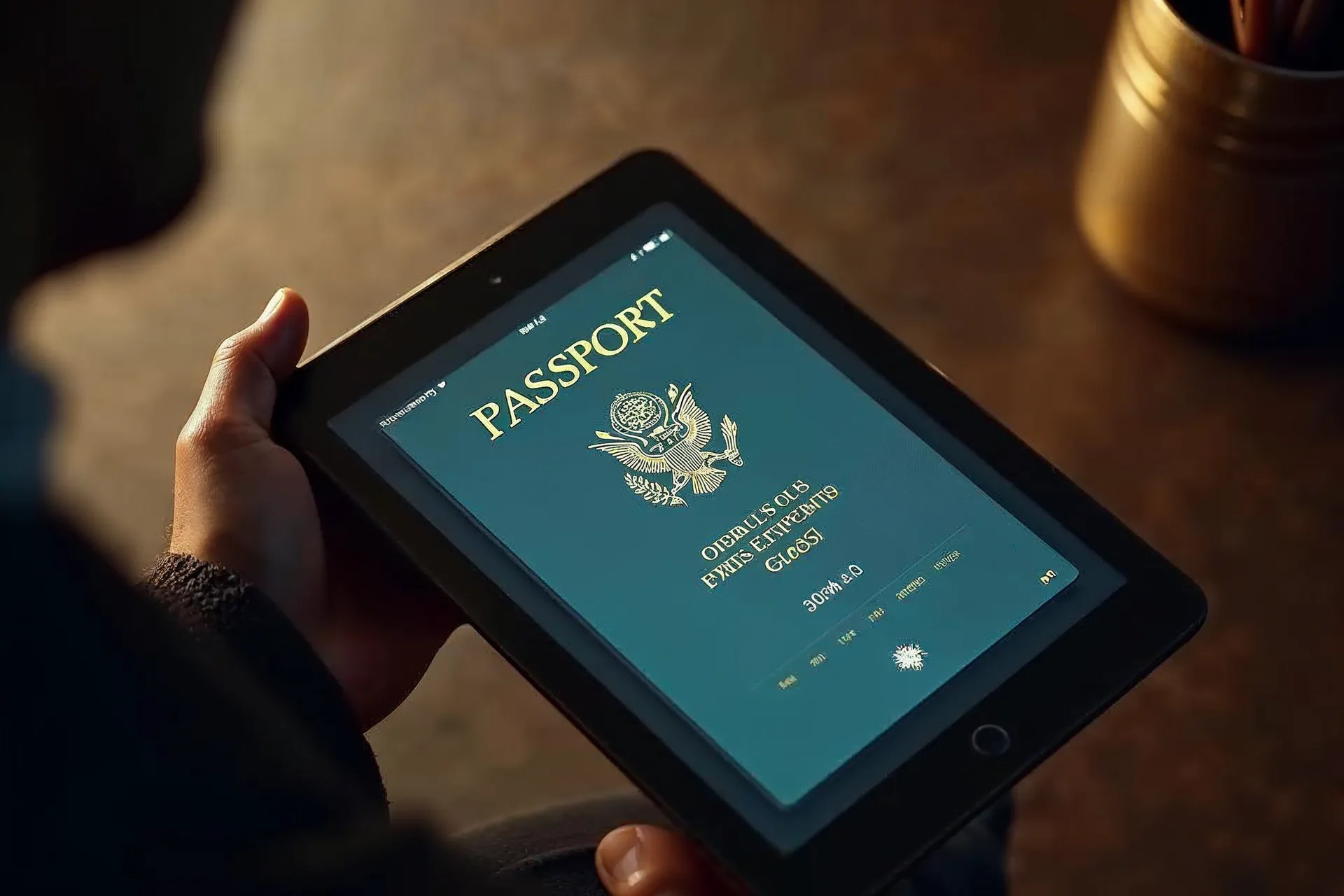
For multilingual localization of digital product passports, a robust technical infrastructure is essential. At its core, you need a platform that centrally manages product data and links it with a Translation Management System (TMS). The TMS should ideally be connected to your Product Information Management (PIM) solution via REST APIs. This allows you to automatically transmit text changes to the TMS and reintegrate them into the product passport after translation. Ensure that the platform supports regulation-relevant data formats such as JSON-LD, XML, or RDF. In practice, building a so-called translation memory database has proven effective, which stores recurring text modules, saving costs and time.
Scalability becomes crucial when you need to operate hundreds or thousands of products, each with 24 language variants. This is where AI-assisted pre-translations come in: modern systems can automatically translate raw texts, which are then reviewed by native speakers. This hybrid approach significantly reduces turnaround time. Important: The EU regulation requires traceable and auditable versions of the product passport. Your system must therefore log every change with a timestamp and author. Ensure that the translations are stored in a separate database that allows for a complete comparison with the original at any time.
Another technical aspect is the delivery of the passports to end users. The product passport must be accessible via a unique data carrier (QR code, RFID) on the product itself or its packaging. The underlying web application must automatically detect the user's language (browser language, geolocation) or offer a language selection. Plan a server-side language switch that falls back to English for unknown languages. Additionally, the loading time of the passports should be under two seconds to ensure user acceptance. Test the infrastructure with realistic data volumes and all languages before going live.
Concrete recommendation for action: Check whether your existing PIM system natively supports the extension with language variables and translation workflows. If not, invest in a separate TMS with open interfaces. Conduct a proof-of-concept with a representative product group in 3–5 languages. Measure the turnaround time per translation unit and optimize the process. Conclude a maintenance contract with your technology partner that includes updates in the event of changes to delegated acts. Keep in mind: The infrastructure must meet regulatory requirements not only today, but also in the years to come.
Identifying Data Fields: What Needs to Be Localized?
The localization of digital product passports begins with a systematic analysis of the data fields to be translated. Not all content is equally relevant for linguistic adaptation – strictly distinguish between structured data (e.g., material numbers, weight specifications, certificate identifiers) and free-text descriptions. Structured data typically remains untranslated, while all content read by consumers or market surveillance authorities must be available in the respective national languages.
Specifically, the fields requiring localization include: product name, brand name, instructions for use, safety information, repairability details (e.g., spare part numbers must remain technically correct, but their accompanying descriptions should be translated), and legal notices regarding disposal or energy consumption. Fields with variables or units require special attention: ensure that translation processes correctly handle placeholders for numbers, units of measurement (meters, liters, kilowatt-hours), or currency symbols. A typical mistake is translating "5 cm" into "5 inches" – this is not permitted in practice, as units of measurement in the passport must remain legally compliant.
It is advisable to create a data field matrix that categorizes each field: "Raw text requiring translation," "Structured data requiring no translation," "Legal texts subject to review." For each country, determine whether field-specific format requirements exist (e.g., date formats in DD.MM.YYYY, abbreviations such as "Art.-No." or "Ref."). Also consider accessibility: alternative texts for icons or pictograms must be available in every language.
Technical implementation is carried out via a translation management system that automatically identifies the fields and releases only the relevant texts for translation. Define exclusion criteria in advance – for example, all fields with the prefix "technical_id_" or "gtin_" are not localized. For each field requiring localization, a brief instruction for translators should be provided: context, maximum character count, and whether technical terms from a glossary must be used. Only in this way can inconsistencies across 24 languages be avoided. Please note: The legal responsibility for the accuracy of the translated content lies with the manufacturer – have each language version approved by a qualified person. We recommend consulting your legal department on this matter.
Terminology Management as the Foundation of Consistent Translations
Consistency in terminology is critical for the credibility and legal compliance of digital product passports. Centralized terminology management prevents the same term from being translated differently across languages – which can lead to confusion or legal risks, especially for technical features (e.g., "power consumption" or "protection class"). Build a multilingual glossary containing all relevant technical terms from your product portfolio in the 24 EU languages.
Start by extracting key terms from your existing product databases and technical documentation. For each term, define the preferred translation ("Preferred Term") as well as synonyms to avoid ("Forbidden Terms"). For example, in German, "CE-Kennzeichnung" is correct; "CE-Zeichen" is common but not recommended, as it may be defined differently in EU legal texts. Also define capitalization rules (e.g., "RoHS-konform" vs. "RoHS-konform"). This effort pays off: In practice, a good glossary reduces translation time by up to 30% and significantly lowers error rates.
Use the terminology as a basis for machine translation models: Feed the glossary into your MT engine so that the AI automatically translates terms like "Ersatzteil" with the correct technical word in each target language (e.g., "Ersatzteil" = "spare part" ≠ "replacement part" – both are possible in English, but only one variant is permitted for your passport). Maintain the glossary continuously: every new product or legal change (e.g., updated energy efficiency classes) requires an update of the terminology.
We recommend completing the terminology work before project start. Appoint a terminology manager (e.g., from the technical or legal department) to approve each new translation. For 24 languages, a multilingual glossary should be hosted in a cloud-based tool such as a translation management system, so that all translators and reviewers can access it. Contractually bind external translation service providers to your glossary as well. An important legal note: Responsibility for the correctness of the terminology lies with the product owner – the glossary is a tool, but does not replace technical and legal review. Consult your legal department for guidance on this.
Workflow for AI-powered translation with human review
An efficient workflow for localizing digital product passports combines the speed of machine translation with the precision of native-speaker review. The EU Ecodesign Regulation does not require certified translation, but linguistic accuracy is essential for market acceptance and legal certainty. Our proven three-step process ensures this: preparation – AI translation – human quality assurance.
In the preparation phase, source texts – ideally in English or German as source languages – are cleaned: remove formatting, identify placeholders, and align the texts with your terminology glossary. This is done automatically via your translation management system. The text is then passed to an AI translation engine specifically trained on technical and regulatory content. Ensure the model knows your industry terminology – many providers allow glossary uploads. The AI delivers raw translations into all 24 EU languages within seconds.
The second step is human review by native-speaking experts. These editors not only correct linguistic errors but primarily verify technical accuracy: Are the translations of technical parameters correct? Are the legal notes (e.g., on warranties or disposal) adapted for each country? Each editor has access to the glossary, the data field matrix, and the source texts. Important: For product passports, we recommend 100% review – random sampling is risky, as incorrect translations in safety warnings, for example, can lead to liability traps. Plan for 2 to 5 working days per language for 10,000 words, depending on technical complexity.
Finally, technical integration takes place: the reviewed translations are imported into the XML or JSON structure of the digital product passport. Before publication, perform an automated comparison (e.g., via scripts that check whether all required fields are filled in each language). Have the final version approved by a second colleague from product development or legal. Store all translations with version control so you can reuse previous work during updates. Note: AI translations without human review are not recommended for digital product passports under the Ecodesign Regulation, as the manufacturer bears responsibility for errors. Seek legal advice on this. This workflow ensures that your product passports are rolled out consistently, accurately, and compliantly in 24 languages.

Quality assurance in 24 languages: methods and criteria
Ensuring the linguistic and technical correctness of digital product passports in 24 languages requires a multi-level quality assurance (QA) process based on established translation standards such as DIN EN 15038. Start by setting up a central translation memory (TM) system and a consolidated terminology database. These tools ensure that recurring terms like "energy efficiency class" or "repairability index" are translated consistently across languages. Define specific QA criteria for each language, e.g., checking grammatical correctness, compliance with EU format specifications (e.g., date or unit formats), and cultural appropriateness.
Conduct a two-stage review: first, an automated check using AI-supported error detection (e.g., detection of missing numbers, inconsistent units, or untranslated placeholders). This is followed by a manual review by native-speaking specialist reviewers who perform a random check of a representative sample of about 10–20% of the product passports per language. For safety-relevant or legally sensitive fields – such as data on product liability or chemical substances – we recommend a full review. Define clear error categories: translation errors, terminology deviations, formatting errors, and content inconsistencies. Aim for an error rate of below 2% per language version, with critical errors (e.g., incorrect warnings) being unacceptable.
Document all QA results in an inspection report specifying date, reviewer, checked fields, and corrections. This report serves not only internal quality control but also as evidence during conformity checks. Implement a feedback loop in which reviewers regularly report recurring errors to the translation team and terminology managers to continuously improve baseline quality. Also consider language-specific peculiarities: In Polish, all product components must be correctly declined in the locative case, while in Finnish, partitive usage for quantities is a common source of errors.
Train your reviewers specifically in the content of the EU Ecodesign Regulation, especially the defined data fields for product passports. Use proven checklists differentiated by product categories (electronics, textiles, furniture). Conduct regular calibration sessions among reviewers of different languages to harmonize evaluation standards. Allocate sufficient time for QA – with 24 languages, manual review per pass can take several weeks. Automate where possible, but never replace human control for legally relevant content.
Integrating Translations into Existing Product Data Systems
To efficiently integrate localization results into your product data landscape, an API-based integration between the Translation Management System (TMS) and your Product Information Management (PIM), ERP, or CMS is recommended. Ideally, your TMS supports bidirectional interfaces (e.g., REST APIs) that enable automated data exchange. Ensure that the transmitted data fields are clearly identified—preferably through a combination of product SKU and language code (e.g., de_DE for German, en_GB for British English). Use standardized exchange formats such as XLIFF 2.0 or XML with predefined schemas to avoid misunderstandings.
Before importing translations into the target system, perform a technical validation: check whether the character count does not exceed field limits, whether special characters are correctly encoded (e.g., umlauts, Cyrillic characters), and whether placeholders for dynamic content (such as numbers or variables) are still present. When feeding back into your PIM, translations should be stored as a separate attribute per language, not as a replacement of the source text. Define clear metadata fields for translation version, review date, and status ("in translation", "reviewed", "approved"). These metadata facilitate future updates or traceability.
When updating product passports (e.g., due to technical changes), all translations must be updated as well. Automate this process using delta translation memories: only re-translate the changed segments. Ensure your workflow includes language-specific approval before going live—ideally via an approval-based status in your system. For time-critical updates, you can opt for immediate publication with later review, but then define a clear rollback procedure.
Test the integration first with a small product group (e.g., 10 products in 5 languages) in a staging environment. Measure transmission times, check consistency of imported data, and have a native speaker sample check. Document all interface errors and adjust mapping rules. Also consider special cases such as multilingual products (e.g., user manuals containing multiple language versions in one file). Implement an automatic alert for failed imports or inconsistent data to minimize manual intervention.
The EU Ecodesign Regulation requires digital product passports for numerous product groups. For companies with pan-European distribution, this means providing passport content in up to 24 languages. Our guide shows you how to design this process efficiently – from terminology management to AI translations and quality assurance.
Legal Aspects: Liability and Compliance in Translation Errors
Errors in translations of digital product passports can have significant legal consequences. According to the EU Ecodesign Regulation, data in product passports must be provided in the official language of the country of marketing. A translation error in safety-relevant information (e.g., regarding battery disposal or CE marking instructions) can be considered a violation of the Product Safety Directive (2001/95/EC) and may lead to market withdrawals or fines. Liability lies with the manufacturer or importer—even if an external translation service provider was commissioned.
To minimize liability risks, you should contractually agree on clear warranty rules with your translation service provider. It is advisable to include an agreement on the correction of translation errors within specific deadlines and a limitation of liability to demonstrable errors. Additionally, implement internal quality assurance processes that mark legally relevant fields (e.g., via a metadata tag "legally relevant"). These fields must not only be linguistically correct but also compliant with current EU requirements. Ideally, have such information reviewed by a lawyer with European expertise before translating it into other languages.
Note that for products distributed in multiple EU member states, often divergent national implementations of the EU regulation exist. France, for example, additionally requires the repairability index in French. A Scandinavian country might demand a specific translation for environmental labels. These country-specific requirements must be covered by your translation team. Document every legal source that influenced the translations and archive the reviewed versions for at least ten years after market exit—as required by the Product Safety Directive for documentation.
Please note: This guide does not constitute legal advice. In case of doubt, consult a specialized lawyer for EU product law who can review the current regulations and national implementing provisions. A proactive approach—such as setting up a legal review process within the TMS—can prevent later conflicts. Invest in regular audits of your localized product passports by an external body to independently confirm compliance. This builds trust with market surveillance authorities and strengthens your position in case of disputes.
Cost Control and Efficiency in Multilingual Strategy
Translating digital product passports into 24 EU languages can incur significant costs if the process is not designed efficiently from the start. To keep expenses manageable, it is advisable to store recurring text modules such as safety instructions, material definitions, or recycling guidelines as translation memories. Experience shows that this can save 30 to 40 percent of translation volume, as identical segments are billed only once. Additionally, you should create a terminology glossary for each language pair to ensure consistent use of technical terms like 'repairability index' or 'carbon footprint' and eliminate rework.
Another lever is the strategic selection of target languages based on market priority. Instead of rolling out all 24 languages simultaneously, you can cover the five to six most important EU markets in the first phase (e.g., German, English, French, Spanish, Italian, and Dutch). The remaining languages are introduced according to defined criteria such as revenue potential or legal deadlines. For the translation itself, an AI-supported pre-translation process is recommended, where machine systems deliver a raw version that is then edited by native speakers. This combination typically reduces the cost per word by half compared to purely human translation, without sacrificing quality.
Automation of subtasks also contributes to efficiency gains: metadata such as product ID numbers or certification logos do not need to be translated manually but can be pulled from master data via an API. For mandatory fields of the Ecodesign Regulation – such as energy efficiency classes or substance lists – you should use standardized translation templates approved once by your legal department. Additionally, check whether translations can be linked to existing product data systems like a PIM (Product Information Management). Automatic synchronization avoids duplication and ensures that all language versions are updated promptly when product changes occur.
Finally, clear cost controlling is essential: record efforts per language, per translator, and per correction cycle. This data helps identify workflow weak points – such as recurring errors in specific language pairs – and take targeted countermeasures. Investing in a Translation Management System (TMS) typically pays for itself within a year, as it makes supply chains transparent and enables renegotiations with service providers based on valid metrics. Please note that the specific design of your cost-saving measures should always be coordinated with a legal advisor to ensure compliance with the EU Ecodesign Regulation.

SEO for Localized Product Passports: Visibility in European Markets
A digital product passport available in 24 EU languages is only valuable if it is found by the relevant target groups. Since the Ecodesign Regulation imposes no direct SEO requirements, optimization is in your hands. A well-localized product passport that is search-engine friendly can significantly boost your product’s visibility in national markets. Experience shows that products with high information needs – such as electronics, textiles, or furniture – benefit most from a language-specific keyword strategy.
Start with keyword research per target market, because search terms like 'energy efficiency' are not translated one-to-one into other languages. In French, users are more likely to search for 'classe énergétique' than 'efficacité énergétique'. Tools like Google Keyword Planner help identify high-volume terms. Then integrate these keywords into the text modules of the product passport, especially in headings, metadata, and recurring phrases like 'repair manual' or 'disposal instructions'. However, ensure the translation remains natural – an over-optimized text appears untrustworthy and can be penalized by search engines.
Another important aspect is language-specific URL structure. Use separate URLs for each language (e.g., /de/produktpass, /fr/passeport-produit) instead of a single URL with language parameters. This facilitates search engine crawling and improves ranking in respective country domains. Don’t forget to set hreflang tags correctly to avoid duplicate content issues. Meta tags (title, description) should also be optimized per language – for example, by incorporating locally relevant search terms. Have these texts written by native speakers, as automatic translations often produce unnatural phrasing.
In practice, a multi-stage SEO process is recommended: after the initial translation, analyze the performance of individual language versions using analytics data. Identify pages with low click-through rates and optimize titles and descriptions accordingly. The loading time of the product passport also matters – ensure multilingual assets are not too heavy. Use Content Delivery Networks (CDNs) to speed up delivery. Finally, SEO is an ongoing process. Schedule quarterly ranking reviews. The measures described here do not replace individual legal advice; consult a specialized attorney for legal questions regarding search engine guidelines.
Case Studies: Typical Obstacles and Solutions
In practice, localized digital product passports reveal recurring challenges. A common issue is inconsistent translation of technical terms. Example: An electrical appliance manufacturer used the term "Energieeffizienzklasse" in German, but "classe énergétique" in French and "clase de eficiencia energética" in Spanish. After review by native speakers, it became clear that the Spanish variant was not standard in the market. The solution was to create a multilingual glossary, agreed upon by subject matter experts before translation began. This avoided rework in 20 percent of cases.
A second case study concerns the integration of translations into a Product Information Management (PIM) system. A furniture manufacturer found that after an update to the product master data (e.g., change in material composition), translations in five languages were not updated. The result: an Italian customer received a product passport with outdated recycling instructions. The error occurred because the translation workflow was triggered manually. The solution was an API-based interface between the PIM and the translation management system, which automatically generates a translation task with every change. Additionally, a quarterly reconciliation was implemented to detect deviations between the original and the translation.
A third hurdle is legal linguistic compliance. A pharmaceutical company translated its product passport into 24 languages, but faced objections in Poland due to inadequate translation of warning notices. The Polish market explicitly requires that certain safety phrases from Regulation (EU) 2023/988 be taken verbatim from the Official Journal. However, the translators opted for a paraphrased rendition. The remedy was a legal review by specialized lawyers before publication. Since then, each language is proofread by a lawyer with language skills.
From these examples, concrete recommendations can be derived: invest in centralized terminology management, automate translation triggers via API interfaces, and always have legally relevant content reviewed by local legal experts. Please note that these solution approaches are general in nature and do not cover your specific situation. Therefore, consult a lawyer with expertise in EU product law for implementation.
Checklist for Introducing Localized Product Passports
Introducing localized digital product passports requires a structured approach. This checklist summarizes the key steps from planning to continuous optimization.
**1. Foundations and Requirements Analysis** - Clarify the scope: Which products fall under the EU Ecodesign Regulation? Check product-specific implementing acts for special provisions. - Define target markets and their language versions. Consider regional variants (e.g., French for Belgium vs. France) in addition to the 24 EU official languages. - Create a data catalog of all mandatory and optional fields of the product passport (e.g., material composition, repairability index, carbon footprint).
**2. Terminology and Content Preparation** - Establish a binding glossary of technical terms, coordinated with the legal department and subject matter experts. Use existing EU terminology databases such as IATE. - Develop style guides for each language (e.g., country-specific conventions for units of measurement, date formats, currency symbols). - Structure source texts modularly so recurring elements (e.g., safety instructions) can be maintained centrally and translated once.
**3. Technical Implementation and Translation Process** - Choose a suitable translation management system (TMS) with API integration to your product database. Ensure support for XML/JSON formats and version control. - Implement an AI-supported workflow: machine pre-translation with domain-specific models (e.g., for technical descriptions), followed by native-speaker review by professional translators. - Set up quality controls (e.g., glossary compliance check, correct numbers and units). Use automated checks (QA tools) and random sampling by a second translator.
**4. Integration and Publication** - Test the localized product passports in a staging environment. Verify that all data fields are displayed correctly and links (e.g., to external sources) work in the respective language. - Ensure that the passports are delivered consistently across all relevant channels (website, QR code, app). - Document the entire process for audits and regulatory evidence. Maintain a change log to track subsequent updates.
**5. Continuous Improvement** - Schedule regular reviews with local offices or native speakers to ensure linguistic and cultural appropriateness. - Analyze user feedback (e.g., support inquiries about unclear wording) and derive improvements. - Update translations promptly upon regulatory changes or product updates. Perform a full review when new content is added.
This checklist helps avoid common mistakes such as inconsistent terminology, non-adapted formats, or incomplete localization. Systematic implementation saves costs in the long run and minimizes legal risks.
Outlook: Further Development of Ecodesign Requirements and Localization
The EU Ecodesign Regulation is not a static set of rules. You will need to prepare for the requirements for digital product passports to be expanded and refined in the coming years. This outlook helps you future-proof your localization strategy.
**Expansion of Product-Specific Requirements** The European Commission is continuously working on implementing acts for additional product categories – from textiles and electronics to furniture. Each new regulation brings additional data fields that need to be translated into all languages. Therefore, plan for scalable terminology management that can flexibly adapt to new terms. Early analysis of consultation drafts has proven effective to start translation preparations in parallel with the legislative process.
**Integration with Other EU Data Spaces** Digital product passports are to be linked with other European data infrastructures in the future, such as the European Data Space for Circular Economy. This means that metadata and classifications (e.g., waste codes, material markings) must be available in standardized, multilingual taxonomies. When localizing, ensure that official translations from EU databases (e.g., the European Waste Catalogue) are used and maintain them in your glossary. Close coordination with industry associations helps avoid inconsistencies.
**Dynamic Content and Real-Time Localization** In the future, product passports could contain not only static but also dynamic information – such as current repair costs or supply chain CO₂ emissions. This data must be provided in real time in multiple languages. This requires fully automated localization workflows where AI translations are delivered without human review only when the error rate is minimized through continuous training. Prepare your systems today for such scenarios by feeding your translation models with domain-specific data and monitoring quality metrics such as BLEU scores.
**Legal Certainty and Liability** With increasing complexity, the liability significance of faulty translations also rises. Courts will in the future scrutinize more strictly whether companies have exercised due diligence in localization. Therefore, document every step – from terminology definition to translation quality and approval. Maintain an audit-proof logbook and use certifications such as ISO 17100 for translation service providers as evidence. For critical legal terms, consider a separate legal review by native-speaking lawyers (Note: Consult your legal department for this).
**Conclusion** Those who invest today in a flexible and quality-oriented localization infrastructure will be prepared for future requirements. Monitor political developments in Brussels, exchange ideas with industry colleagues, and continuously adapt your processes. This not only avoids costly rework but also unlocks competitive advantages in European markets.
Collaboration with Localization Service Providers: Selection and Interfaces
Choosing the right localization partner is crucial for the timely and correct implementation of the EU Ecodesign Regulation. When selecting, look for proven experience with technical product documentation and ideally references from your industry. A pure translation service provider without technical understanding of data structures will struggle to handle the complexity of digital product passports. Ask whether the provider uses a translation management system (TMS) that can integrate into your product database (PIM system). Only this avoids repeated manual exports and imports.
Clarify binding interfaces at the start of the collaboration: What data format do you deliver? What quality standards apply to the delivered translations? How are updates or correction cycles handled? A proven approach is to set up a shared project space where you store glossaries, style guides, and reference materials. Also define clear responsibilities: who checks the translation for technical accuracy (your internal experts) and who for language quality (the service provider)?
A common objection to using external service providers is cost. However, experience shows that the investment pays off through economies of scale and avoided errors. Request a detailed quote that breaks down costs for terminology work, translation, review, and project management. Ensure that the prices per word or per character apply to all 24 EU languages – some providers charge a surcharge for smaller languages.
Legally, it is important to note that liability for the correctness of localized content remains with you as the manufacturer. Therefore, have your service provider confirm in writing that the translations are produced according to the current state of the art and in consideration of the Ecodesign Regulation. Independent legal advice on contract drafting is recommended.
A phased rollout has proven practical: start with two to three main languages (e.g., German, English, French), test the workflow, and then expand to all EU languages. This minimizes initial difficulties and allows you to optimize processes before the bulk of translations arrives.
FAQs
Which products are affected by the EU Ecodesign Regulation with a digital product passport?
The regulation initially applies to product groups with high environmental impact, such as electronics, batteries, textiles, and construction materials. The specific requirements will be specified in delegated acts. We recommend monitoring current EU publications and checking early whether your products are affected. If in doubt, please consult your legal advisor.
How can we ensure that translated product passports are legally compliant?
Legal compliance requires that all mandatory information is correctly translated and no misleading formulations are used. Have translations reviewed by native-speaking subject matter experts who are also familiar with the legal framework of the target country. Document the translation process transparently. This information does not replace legal advice.
What role does SEO play in the localization of digital product passports?
Localized product passports can be found in local search engines if you integrate relevant keywords in the local language. Ensure natural embedding into the content without compromising readability. Structured data in the respective language supports visibility. The specific SEO strategy depends on your products and target markets.