

2026-05-05 · Baduno Editorial Team · 27 Min. reading time · Blog & Knowledge
Website Localization for Denmark: Hygge, Mobile Payment, and High Expectations
Denmark is a digital leader, but its users expect more than just translation. From MobilePay to Hygge to direct communication, winning over Danish customers requires precise localization—linguistically, legally, and culturally. Our guide outlines what you need to know.
Why Denmark Is Its Own Localization Market: User Expectations and Cultural Specifics
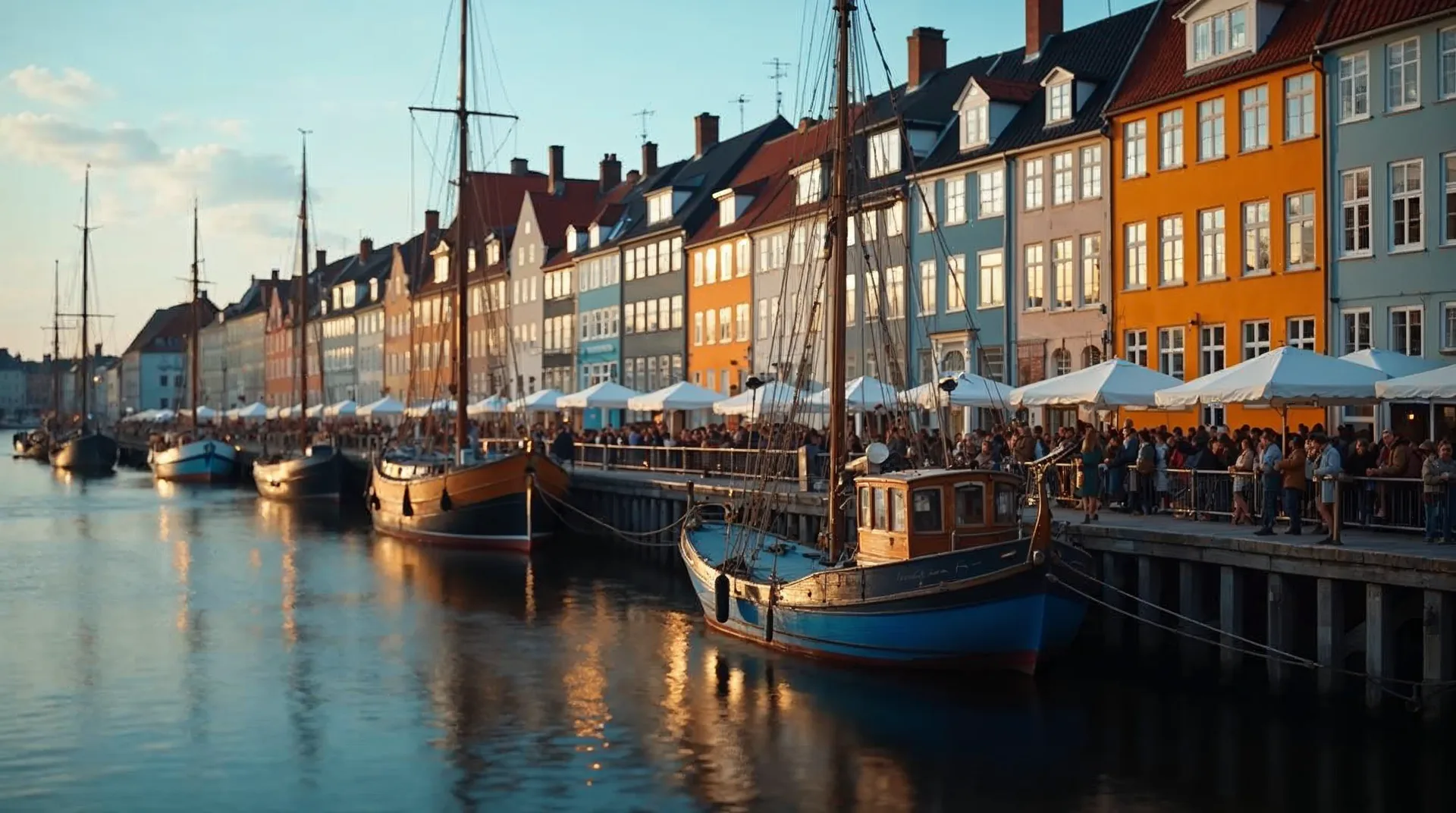
Denmark differs significantly from other Scandinavian countries – and not just linguistically. When optimizing your website for the Danish market, you must understand the specific expectations and cultural peculiarities of users. Danes place great value on efficiency, transparency, and direct but polite communication. Clichés or exaggerated advertising promises are quickly perceived as untrustworthy. Instead, they expect clear information, honest product descriptions, and fast service – whether during checkout or customer support.
A central cultural concept is "Hygge." Originally a feeling of coziness and well-being, it influences design and tone: warm, minimalist design, natural colors, and a personal touch are well received. At the same time, Danish users are digitally savvy and critical. They compare offers carefully and expect a seamless user experience. A slow loading time or a confusing menu can cause them to leave. In practice, websites that cater to Danish design sensibilities and use clear calls-to-action achieve longer dwell times.
Added to this is the high willingness to pay for digital services. Denmark is one of the leading e-commerce markets in Europe, but also one of the most demanding. Danes expect not only a localized currency (DKK) and correct VAT information but also adaptation to local payment habits (see chapter on Mobile Payment). Moreover, trust in online services is high, but it must be underpinned by data protection and transparent terms and conditions. A missing imprint or unclear delivery conditions are a no-go.
Practically, this means: Before localization, conduct a market analysis that covers not only language but also design preferences, legal requirements (e.g., Danish consumer law), and the competitive landscape. Engage Danish native speakers if possible, who can not only translate but also assess cultural nuances. Because only those who combine Hygge and directness will truly impress Danish users.
The Danish Language: Spelling, Local Expressions, and Avoiding Norwegian-Swedish Mix
Danish is not an easy language – even Scandinavian neighbors often struggle to understand it. For website localization, this means: You must consistently use Danish spelling, grammar, and idiomatic expressions. A common mistake is confusing it with Norwegian (Bokmål) or Swedish. Although the languages are related, there are many false friends and different spellings. For example, "kann" in Danish is "kan," in Swedish it's "kan" – but the pronunciation and usage vary. Even trickier: words like "rød" (red) are spelled the same in Norwegian but "röd" in Swedish. A mix immediately looks unprofessional.
Special attention must be paid to the Danish letters Æ, Ø, and Å. These must be correctly encoded and displayed in the user interface. If they are missing or replaced by ae, oe, aa, it can impair readability and create an impression of sloppiness. Capitalization also differs: In Danish, nouns are written in lowercase – unlike in German. A translation service that ignores this produces unusable texts.
Local expressions and idioms are another key. Danes use many specific terms in everyday life that are often not in dictionaries. Examples: "Det er nice" (That's cool) or "Tak for mad" (Thanks for the food – a politeness phrase after eating). Such expressions signal that you understand the market. However, use them sparingly and only if they fit the brand tone.
To avoid a Norwegian-Swedish mix, I recommend: Work exclusively with Danish native speakers. Have translations proofread by a second Dane. Use glossaries with fixed terms (e.g., for "Warenkorb" = "indkøbskurv," not "shoppingvogn"). Avoid generic translation tools without human review. Because in practice, good AI translation is often not enough – especially for creative or marketing-heavy content. Only through careful linguistic localization will you be perceived as trustworthy by the demanding Danish target audience.

Mobile Payment in Denmark: Integration of MobilePay and Local Payment Providers
Denmark is a pioneer in mobile payments. While credit card payments are still standard in many countries, mobile payment solutions dominate in Denmark. Above all, MobilePay: almost 90% of the Danish population use the app. If your website does not offer MobilePay, you are leaving revenue on the table. The integration should be seamless and immediately recognizable to the user – ideally as one of the first payment options in the checkout. MobilePay allows payments via QR code or by redirecting to the app, which speeds up the purchase process.
In addition to MobilePay, other local service providers are relevant: Dankort (the national debit card) and common credit cards (Visa, Mastercard) as well as invoice services like Klarna. Many Danes expect you to accept at least Dankort, as it is considered the safest payment method. Ensure your payment gateway supports all common Danish options. The payment page should be clearly labeled in Danish and transparently display any fees. Hidden costs are a reason for abandonments.
Another aspect: Danes place great importance on security when paying. Display trust seals (e.g., from e-mærket, the Danish e-commerce quality label) and SSL encryption. MobilePay is considered particularly secure because it does not transmit sensitive card data directly. Actively communicate these security benefits. In practice, it has proven effective to send a confirmation via SMS or in the MobilePay app after purchase – this builds trust and reduces returns.
Finally: thoroughly test the payment flow on different devices, especially smartphones. Since the mobile conversion rate in Denmark is above average, the checkout must be optimized for small screens. Avoid long loading times and unnecessary steps. A simple integration of MobilePay can significantly reduce the cart abandonment rate. However, note that legal requirements for payment service providers change. Therefore, seek advice from a specialist lawyer for e-commerce law to comply with current regulations.
UX Design for Danish Users: Clarity, Minimalism, and Trust Signals
Danish users expect a website that is immediately understandable and free of superfluous elements. Scandinavian design philosophy emphasizes clarity, generous white space, and intuitive navigation. In practice, this means: avoid visual clutter such as pop-ups that do not directly lead to the goal, and instead focus on a hierarchical information architecture. Product or service descriptions should be precise – Danish directness expects users to see at a glance what you offer and how they can obtain it.
Trust signals are particularly important in Denmark, as users are critical of unknown providers. Therefore, prominently display recognizable seals and logos of well-known payment providers such as MobilePay or Visa/Dankort. Customer reviews should also be placed prominently, ideally with original Danish texts. A clean but professional layout with consistent typography conveys competence. Avoid translations that retain English UI elements like 'Click here' in German or Danish – localize all buttons and error messages as well.
Another aspect is performance: Denmark has high internet penetration and fast connections, but users still expect loading times under two seconds. Optimize images and use caching to improve mobile usage. Mobile First is mandatory, as many users shop or research via smartphone. Test your website on mobile devices with Danish mobile networks to rule out delays. A responsive design that adapts to different screen sizes is a basic requirement.
Finally, pay attention to a clearly formulated customer journey: from the first landing page to the order or contact, there should be no unnecessary hurdles. Use progress indicators in multi-step processes and place call-to-action buttons prominently but not intrusively. A minimalist shopping cart with visible shipping costs and delivery times reduces abandonment rates. Remember: in Denmark, transparency and honesty are core values – hidden costs or opaque navigation immediately lead to loss of trust.
Legal Basis: Danish Imprint, Data Protection (supplementary to GDPR) and Cookie Notices
For the Danish market, national regulations must be observed in addition to the GDPR. The imprint ('Om os' or 'Kontakt') must mandatorily include the CVR number (Danish tax number), company name, full address, and contact details. If the CVR number is missing, the company appears untrustworthy – in practice, Danish users often check this. For shops, the general terms and conditions ('Handelsbetingelser') in Danish are also required, including cancellation policy ('Fortrydelsesret') and delivery information.
In addition to the GDPR, Denmark's Markedsføringsloven (Marketing Act) applies, which strictly regulates consent for email marketing and telephone advertising, among other things. The Cookie Directive is also implemented in Danish: You need active consent for non-essential cookies, whereby the opt-in solution must be particularly transparent. A cookie banner should be labeled in Danish and clearly distinguish between 'Nødvendige' (necessary) and 'Funktionelle' or 'Marketing'. Avoid pre-checked boxes – these are not permitted in Denmark.
Privacy policies must be fully translated into Danish, not just parts. Ensure that the processing of personal data in connection with MobilePay or other local payment services is explained separately. The Danish Data Protection Authority (Datatilsynet) can impose fines that exceed the GDPR level. Therefore, have your legal texts reviewed by a Danish lawyer. This is not a guarantee, but experience shows it reduces the risk of warnings.
Practical recommendation: Integrate an imprint with CVR number on every page, place a easily accessible privacy policy, and implement a cookie consent tool with granular selection. Update the texts as soon as the legal situation changes, and conduct regular audits. For shipping to Denmark, you also need information on customs and VAT (25% Danish VAT for sales to private customers). Note: This does not constitute legal advice – consult a specialist for this.
Local Search Engine Optimization: Danish Keywords, .dk Domain and Regional Search Results
For successful SEO in Denmark, using a .dk domain is advantageous because Google Denmark considers it a strong local signal. Additionally, you should use a Danish IP address to reinforce geographical relevance. If a .dk domain is not available, a landing page with /da/ or /dk/ path can be created, but the effect is weaker in practice. Important: The language of the website must be consistently Danish – avoid mixing with Norwegian or Swedish, as this confuses users and negatively affects rankings.
Keyword research for Denmark requires consideration of local language habits. Danish users often search with specific terms like 'køb online' instead of 'online kaufen' or 'leveringsmuligheder' for delivery options. Use tools like Ahrefs or Sistrix with a Danish index to determine search volume. Note that Danes often search for products with specific names, e.g., 'rød kjole' instead of 'rot Kleid'. Long-tail keywords are particularly relevant because the search intent is precise. Create content that addresses these search queries, such as guides or product comparisons in Danish.
Regional search results in Denmark are strongly influenced by Google Denmark (google.dk). In addition to the domain, local backlinks are crucial: links from Danish websites such as Trustpilot.dk, Bilka.dk or local business directories strengthen your authority in the country. Entries in Danish business directories such as Krak.dk or 118.dk are also helpful. Ensure that your company is listed in Google My Business with a Danish address (if available), even if you only sell online – this can increase local visibility.
Hreflang tags are essential for multilingual websites to tell Google which page to serve to Danish users. Use 'da-dk' as language and country identifier. Ensure correct metadata in Danish: Title tags and meta descriptions should be search engine optimized and formulated in natural Danish. Test indexing with Google Search Console under google.dk. In practice, continuous maintenance and adaptation to current trends (e.g., voice search) improve rankings in the long term – without guarantee, but with measurable effect.

Content Adaptation: Directness, Humor, and Taboos in Danish Business Communication
Danish business communication is characterized by a direct, pragmatic, and informal style. Phrases like 'mit freundlichen Grüßen' or excessive politeness formulas quickly seem unnatural. Instead, Danish readers expect clear statements, concrete calls to action, and a factual presentation of benefits. Avoid excessive superlatives or vague promises—Danes value honesty and realism. A good test: Have your text checked by a native Danish speaker to see if it seems 'for fluffy' (too bloated).
Humor can be used in Danish business communication, but with sensitivity. A dry, self-deprecating tone is popular, but it should never be at the expense of the counterpart. Sarcasm or cynical remarks are out of place in more serious contexts (such as legal or financial topics). For example, a simple product description could be written with a slight wink—like 'We don't promise your coffee will get hotter, but it will taste better.' Ensure that cultural references (e.g., to Danish TV series or politics) are understandable to the target audience. Always test humor with local colleagues before going live.
Taboos in Danish business communication are less numerous than in other cultures, but still important to observe. Avoid exaggerated expressions of national pride (like 'typically Danish')—Danes are sensitive to clichés. Political or religious statements belong in content only if directly related to the topic (e.g., a sustainability report with references to green politics). Excessive familiarity can also be off-putting: Danes use the informal 'du' but only after an explicit offer. In emails, one typically writes 'Hej [first name]'—without 'Mr./Ms.' A faux pas would be to scatter too many English terms: Danes like their language and expect localized content, even if they understand English.
Concrete recommendations: 1) Use direct address with 'Sie' or 'du' depending on the industry—often 'Sie' in B2B, 'du' in B2C. 2) Keep sentences short and avoid passive constructions. 3) Use humor sparingly and only if it fits the brand image—best for informal channels like social media. 4) Have all content reviewed by a native Danish speaker who also recognizes cultural nuances. 5) Check whether translations of idioms are literal or figurative—e.g., 'at slå to fluer med eet smæk' (to kill two birds with one stone) is understandable in Danish, but a direct transfer from other languages can fail.
Social Media and Community: Platforms, Tone, and Timing for the Danish Target Audience
The Danish social media landscape is dominated by Facebook and Instagram—over 80% of Danes use Facebook regularly, mainly for private communication and local groups. LinkedIn is the primary platform for B2B, while Twitter/X remains a niche. TikTok is growing among younger audiences but is not yet relevant for many business fields. Depending on the product, it is also advisable to use platforms like Pinterest (for design, fashion, interior) or YouTube (for tutorials). Decisive: The tone must match Danish directness—friendly, but without exaggerated advertising language.
On Facebook and Instagram, users expect authentic, relatable content. Share behind-the-scenes insights, customer reviews, or local events. Danes respond positively to content that offers real added value—such as tips for better use of your product or explanations of local peculiarities. Consistently use the Danish language, even though many Danes speak English: An English page signals a lack of localization willingness. Post at times when your target audience is online: late morning around 10 a.m. and afternoon between 3 and 5 p.m. on weekdays. Usage is often lower on weekends, except for leisure-oriented content. Use platform-specific tools to analyze when your followers are most active.
Community management requires quick responses—Danish users expect replies within a few hours, and within 30 minutes for complaints. Address criticism directly and factually, avoid evasive platitudes. Danes appreciate it when companies admit mistakes and offer solutions. Use social media for customer service as well: Many Danes use Facebook Messenger or Instagram Direct for inquiries. For contests or promotions, MobilePay is an excellent participation and prize channel—it is extremely popular in Denmark and builds trust. Ensure that all competitions are legally sound (e.g., clear terms and conditions, compliance with data protection rules).
Concrete recommendations: 1) Start with Facebook and Instagram; expand only after analysis to LinkedIn (B2B) or TikTok (B2C young). 2) Publish 3–5 times per week; quality over quantity. 3) Respond to comments within 2 hours during business hours. 4) Integrate MobilePay for contests or direct orders. 5) Localize all visual elements: Use Danish graphics, local influencers, and regional references. 6) Regularly monitor engagement rates and adjust content tone—Danes reward honesty with high interaction.
Translation Quality: Native-Speaker Review and Common Errors in AI Pre-Translations
Even the best AI translation often delivers inaccurate or unnatural results in Danish. Typical errors include incorrect word order (Danish is a V2 language: the verb is in second position), confusion between 'at' (infinitive marker) and 'og' (and), and mistranslated modal particles like 'da', 'jo', or 'vel'. For example, 'Du solltest das vielleicht tun' is often translated by AI as 'Du burde det måske gøre', whereas the correct translation is 'Du burde måske gøre det'. Compound words are equally problematic: In Danish, they are often written as one word, while AI tends to split them. Errors like 'første hjælp' instead of 'førstehjælp' are no trivial matter – they immediately come across as clumsy to Danish readers.
Another common issue is false friends: 'eventuell' means 'måske' (perhaps) in Danish, not 'eventuelt' (which means 'possibly' or 'if applicable' – but in a different context). German 'kontrollieren' is 'kontrollere' (to check), not 'kontrollere' in the sense of 'to control' (that would be 'styre'). Cultural terms like 'Hygge' are also often overused; avoid using the word in every other sentence – it comes across as cliché. AI models tend to translate English or German idioms literally instead of finding an idiomatic Danish equivalent. For instance, 'das ist ein Kinderspiel' becomes 'det er et børnespil' – the correct expression is 'det er en leg'. Only a native speaker can catch these nuances.
A native-speaker review is therefore indispensable. The reviewer should not only correct linguistic errors but also adjust the tone and target audience approach. In practice, a two-step process has proven effective: 1) AI pre-translation for bulk content (for large volumes) 2) Detailed editing by a Dane familiar with the industry. Ensure the translator is also well-versed in the specific terminology of your field – whether legal texts, technology, or lifestyle. The cost of native-speaker review is low compared to the risks of misleading or disrespectful content. Don't blindly trust quality seals: Test the translation with real users in Denmark before going live.
Concrete recommendations: 1) Use AI only as a first draft – never as a final product. 2) Have all texts reviewed by a native Dane who also recognizes cultural nuances. 3) Create a list of common errors (e.g., false friends) and share it with your translation team. 4) Use terminology databases to ensure consistent subject-specific terms. 5) Allow time for queries: The reviewer should not only correct but also suggest and justify alternatives. 6) Monitor reactions after publication – if Danes point out unusual phrasing, respond quickly and adjust your translation processes.
Denmark is a digital leader, but its users expect more than just translation. From MobilePay to Hygge to direct communication, winning over Danish customers requires precise localization—linguistically, legally, and culturally. Our guide outlines what you need to know.
Testing with Danish Users: Usability Tests, Feedback Culture, and Iteration
Before going live with your localized website in Denmark, we strongly recommend comprehensive usability tests with real Danish users. Danes expect an intuitive, error-free user experience and express criticism directly – a trait you should leverage. Recruit test participants from your target audience, ideally across different age groups and devices. Moderate the tests in Danish, as even small language barriers can skew perception. Pay special attention to mobile usage: since Denmark has high smartphone penetration, all functions – especially checkout with MobilePay – must run smoothly on small screens.
Danish feedback culture is characterized by constructive directness. Users will clearly tell you if something is unclear, too slow, or unnecessarily complicated. Don’t hesitate to ask for deeper reasons. Common criticisms include untranslated English terms, too much text, or unfamiliar navigation elements. Document every piece of feedback systematically and prioritize by severity. A typical issue is the incorrect placement of trust symbols: Danes trust familiar logos like MobilePay, NemID/MitID, or the Danish flag – place these prominently on the homepage and in the checkout process.
Iterate based on test results. Plan at least two test rounds: an early one with a clickable dummy or prototype, and a later one with the nearly finished website. Use tools that allow recording of screen activity and mouse movements. After each round, implement concrete changes – e.g., adjust button texts, optimize page load times, or reduce form fields. Measure improvement quantitatively, such as by time-on-task or success rate. Integrate insights into your continuous localization process. Keep in mind: a completed test is not the end, but the start of ongoing optimizations, especially after major updates.
For legal compliance, ensure that tests involving personal data (e.g., IP addresses) are data protection compliant. Obtain consent and anonymize data. Consult your legal department or a Danish lawyer about which regulations apply to your test.

Local Hosting Options: Performance, Load Times, and Server Locations in Denmark
The choice of hosting significantly impacts user satisfaction in Denmark. Danish surfers expect extremely short load times and react sensitively to delays – especially on mobile devices. A server location in Denmark or northern Europe reduces latency considerably. Providers such as One.com, Simply.com, or Danish data centers from Hetzner offer servers in Copenhagen or other Danish cities. Using a CDN (Content Delivery Network) with nodes in Denmark, e.g., from Cloudflare, can also accelerate delivery. Measure performance with tools like Pingdom or GTmetrix and aim for load times under 2 seconds.
In addition to speed, reliability plays a major role. Danes expect availability of 99.9% or more. A local host often provides better support in Danish and understands local conditions. Moreover, with a .dk hosting, you can manage the domain more quickly and benefit from favorable conditions for Danish top-level domains. Pay attention to SSL certificates: these are now standard, but a wildcard certificate can simplify management in multilingual setups.
One advantage of local hosting options is compliance with Danish data protection regulations. Although the GDPR applies throughout the EU, Danish authorities and users place special emphasis on data control. A server in Denmark is subject to Danish legal supervision, which builds trust. Check whether the host is ISO-certified or has security audits. For companies with sensitive data, a dedicated server may be useful; for smaller projects, shared hosting or a VPS is sufficient.
Concrete recommendation: Start with a CDN and a server in Germany if no Danish provider is available. Test load times from various Danish locations. If your target audience is very local, invest in a Danish server. Keep in mind: caching and optimization of images and scripts – e.g., through minification – are essential regardless of location. Consult a hosting expert to determine the best configuration for your traffic and budget.
International SEO for Denmark: hreflang Tags, Subdomain vs. Subdirectory, and Local Backlinks
International SEO for the Danish market requires precise technical implementation. The most important element is hreflang tags, which signal language and country targeting to search engines. For Denmark, use “da-dk” (Danish for Denmark) and for a general Danish page without country focus, “da”. Missing or incorrect tags can lead to duplicate content issues. Implement the tags in the HTML header, in the sitemap, or via HTTP headers. Ensure that each language version references itself and that the x-default page (e.g., English) is defined.
The question of URL structure – subdomain (da.example.com) vs. subdirectory (example.com/da/) vs. separate domain (example.dk) – impacts SEO authority. A subdirectory consolidates domain authority on one domain, which can be advantageous for new sites. A .dk domain signals locality most strongly but requires more backlink building. Subdomains are often treated like separate domains, meaning more maintenance. In practice, we recommend a .dk domain with Danish hosting for companies with a strong focus on Denmark. Ensure correct redirects and canonical tags to avoid duplicate content.
Local backlinks are a crucial ranking factor for the Danish market. Build a network of references, e.g., from Danish industry directories, local news portals, or partners. Relevant sources include Dansk Erhverv (trade association) or regional media like Jyllands-Posten. Also, listings in Google My Business with a Danish address and phone number strengthen local presence. Avoid links from dubious sites; focus on quality and topical relevance.
Practical approach: Start with a technical SEO audit using tools like Screaming Frog or Ahrefs (without naming specific providers). Ensure the Danish version is indexed and free of translation errors in meta data. Use Google Search Console to monitor performance and fix any hreflang errors. Keep in mind that SEO is an ongoing process – schedule regular audits and adapt your strategy to new algorithms. For legal questions regarding the use of brand names in SEO, consult a lawyer.
Checklist: Steps for Successful Website Localization for Denmark
A structured checklist helps you systematically implement the localization of your website for Denmark. Begin with a thorough analysis of the target audience and competition. Check whether a .dk domain already exists or whether you should register one – Danish users prefer local domains. Create a list of content to localize: product pages, legal texts, blog posts, and especially customer-facing areas such as contact forms or support pages.
The second step involves linguistic and cultural adaptation. Engage native-speaking translators with knowledge of the Danish market. Be careful to avoid typical mistakes: using Norwegian or Swedish expressions, incorrect forms of address (Danish users expect a direct 'du' in many contexts), or inappropriate politeness phrases. Integrate local payment providers such as MobilePay – without this option, you will typically lose a significant portion of Danish customers. Test the entire checkout process in Danish and with Danish payment methods.
Technical factors are equally important. Ensure your website is optimized for mobile devices – a large proportion of users in Denmark browse on mobile. Implement hreflang tags correctly to clearly indicate the Danish language version. Check loading times: a server location in Denmark or a nearby region improves performance. Consider the Danish cookie policy, which may go beyond GDPR; seek legal advice on this. Finally, conduct usability tests with Danish users to identify any cultural misunderstandings in design or navigation.
Document all changes and plan regular updates. One-time localization is not enough; content must be continuously adapted to local trends and language developments. Create a process that automatically includes the Danish version with every new campaign or product launch. With this structured approach, you create a solid foundation for sustainable success in the Danish market.
Outlook: Trends in Denmark – Mobile-First, Voice Search, and Sustainability as Positioning
The Danish market is evolving rapidly, and those who want to be successful in the long term should incorporate current trends into their localization strategy. Mobile-First is not an option in Denmark, but a necessity. The vast majority of users access websites via smartphones, and Google prioritizes mobile versions in rankings. Therefore, consistently optimize your Danish website for small screens: reduced loading times, large touch elements, and clear, minimalist interfaces that are easily readable on 5-inch displays. MobilePay – the dominant payment service – must be seamlessly integrated, as many Danish customers prefer mobile payments.
Another emerging trend is voice search. Danes are increasingly using voice assistants like Google Assistant or Apple's Siri – often in Danish. Your SEO strategy should therefore also include long-tail keywords in natural language phrasing. Structure your content so that it appears as an answer to typical questions: use FAQ formats and schema markup for 'Question' and 'Answer'. Since speech recognition for Danish is not yet perfect, clear, direct language without regional dialect helps to be better understood by the assistants.
Sustainability is a central purchase criterion in Denmark and not a niche topic. Customers expect transparent information on environmental aspects: CO₂ footprint, sustainable packaging, supply chains. Position yourself honestly and concretely – exaggerated greenwashing is immediately recognized and damages your credibility. Show on your Danish website how your company lives sustainability, for example through certificates, regionality, or recycling initiatives. Danish consumers value authenticity and direct communication; combine this openness with environmental messages to build trust.
The outlook is rounded off by increasing personalization: Danes expect tailored experiences, such as recommendations based on previous purchasing behavior or local events. Use data collected under the GDPR to deliver relevant content. However, remain transparent and obtain explicit consent – data protection is taken very seriously in Denmark. Those who actively embrace these trends can establish themselves as a modern, customer-oriented provider in the Danish market. Seek support from a Danish legal advisor for legal questions regarding data protection or sustainability claims.
Common Pitfalls in Denmark Localization
Even with careful planning, typical pitfalls can jeopardize the success of your localization. A classic example is insufficient adaptation of payment options. Many providers integrate MobilePay but forget that Danish users also expect invoices via e-Boks or credit cards with MitID. Check in advance which payment methods are actually used in your industry (e.g., ViaBill for installments) and test the entire checkout process with real Danish users. Another stumbling block is neglecting Danish spelling. Especially with compound words (e.g., “selvbetjeningsløsning” instead of “selv betjenings løsning”) and the use of ÆØÅ, errors often occur that look unprofessional. Have all texts proofread by a native-speaking editor specialized in business communication. The choice of domain also requires consideration: a .dk domain is almost mandatory for local SEO, but the technical implementation (e.g., redirects from .com to .dk) must be clean to avoid ranking losses. Do not forget that Danish users expect fast loading times – local hosting in Denmark or Scandinavian data centers is therefore not an option but a basic requirement. A frequently overlooked point is the adaptation of customer service: Danes expect direct answers in Danish within a few hours, ideally via chat or email. If you only use a translation tool, it comes across as impersonal. Therefore, plan for Danish-speaking support resources from the start. Also note that many Danes shop on mobile – your site must not only function on smartphones but also seamlessly integrate all features such as MobilePay. Furthermore, do not underestimate the importance of trust signals: Danish consumers pay close attention to seals of approval (e.g., E-handelsfonden), clear cancellation policies, and transparent pricing (incl. VAT). If anything is missing, users immediately leave. One final pitfall is the cultural tone: Danes appreciate direct yet polite communication. Exaggerated superlatives or flashy advertising appear untrustworthy. A test with a focus group from Denmark can help strike the right tone. Document all pitfalls from your project to avoid them in future localizations.
Working with Service Providers: Selection, Briefing, and Quality Assurance
The choice of the right partner for your Denmark localization significantly determines quality and timeline. When selecting, look for proven experience with the Danish market and ideally references from your industry. Ask for examples of localized websites and check whether language, UX, and legal requirements are correctly implemented. A pure translator is often not enough – look for a provider that also brings technical localization (e.g., MobilePay integration, hreflang tags) and SEO expertise. Before the project starts, a detailed briefing is essential. Define the target audience, tone (formal/informal), payment service providers to be used, and specific keywords for search engine optimization. Give the provider access to your CMS or provide all texts to be translated in a structured format (e.g., Excel or XLIFF). Specify that all texts must be translated by a Danish native speaker and proofread by a second editor. Agree on milestones with concrete approvals: raw translation, editing, technical integration, and final usability testing with Danish users. For quality assurance, a checklist is recommended: Check whether all mandatory information (imprint, privacy policy, cookie notice) complies with Danish law, whether MobilePay is correctly integrated, and whether all buttons and forms work in Danish. Have the finished website tested by a Danish native speaker not involved in the translation process – they will spot subtle linguistic or cultural inconsistencies. Document all feedback and ensure versioning so changes are traceable. Keep in mind that localization is not a one-time project: Plan maintenance contracts for regular updates (e.g., new products, legal changes). A good provider also offers support after launch, for corrections or seasonal adjustments. Collaboration should be based on transparency: Clarify in advance who holds the copyrights to the translations, how updates are handled, and what costs arise from subsequent changes. With a clear briefing and structured quality assurance, you avoid costly rework and ensure your website truly resonates with Danish users.
FAQs
Why is a simple translation not enough?
Denmark has an independent language culture with specific expressions and spellings. A translation that includes Norwegian or Swedish elements appears unprofessional. Moreover, Danes expect local payment methods like MobilePay, a clean design, and trust symbols such as the 'E-mærket'. Without these adaptations, the conversion rate drops significantly.
What are the peculiarities of Danish data protection?
In addition to the GDPR, supplementary regulations apply in Denmark, e.g., regarding cookie consent. Danish users place great value on transparent data processing. Furthermore, the imprint ('Etikette') must contain certain mandatory information, including the CVR number (trade register number). If these are missing, it can have legal consequences and harm trust.
How much does Danish UX differ from German UX?
Danish users prefer extremely clean, minimalist interfaces with clear calls to action. Trust signals such as customer reviews, seals, and only a few but relevant content are more important than in Germany. Loading speed must also be high, as Danes are accustomed to fast, mobile optimization. Missing adjustments lead to high bounce rates.