













2026-07-27 · Baduno Editorial Team · 26 Min. reading time · Blog & Knowledge
Contact Forms for Europe: Address Formats, Required Fields, and Local Preferences
Contact forms are the business card of your website – but in 24 EU languages, a simple field quickly becomes a complex project. Our guide shows how to correctly implement address formats, mandatory fields, and local preferences without legal pitfalls or user-unfriendly surprises. Discover what really matters in localization.
Basics of European Address Formats: Street, House Number, Postal Code, and City
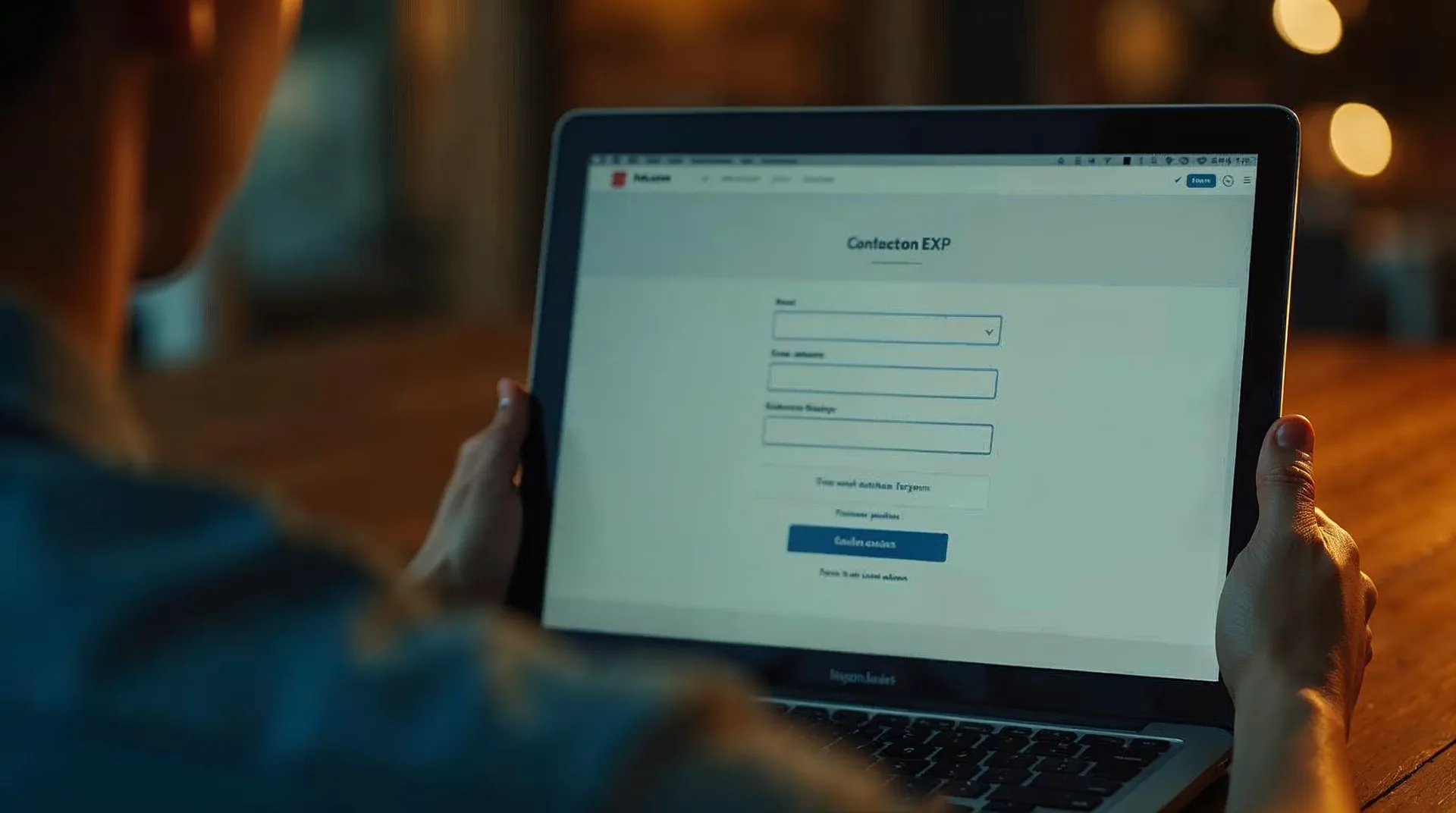
When localizing contact forms for the European market, adapting the address format to country-specific conventions is crucial. While in Germany the order "Street House Number, Postal Code City" is common, many other EU countries place the house number after the street name (e.g., "Calle Mayor 12" in Spain) or even before the street (e.g., "12 Rue de Rivoli" in France). The placement of the postal code also varies: in the Netherlands, the postal code follows the city ("Amsterdam 1012 AB"), while in the UK it appears on a separate line. Incorrect specifications typically lead to frustration and abandonment—around a quarter of users drop out when fields don't match expectations.
Practically, it is advisable to develop a flexible address module that dynamically adjusts field labels and order based on the selected country. Use a single text field for the street with a placeholder like "Street and house number" (e.g., "Musterstraße 12") or separate street and number only if the target country requires it. The postal code should appear as a separate field, with a length limit (e.g., 5 characters for Germany, 4 digits plus 2 letters for the Netherlands). For the city, a free-text field is sufficient, supplemented by autocomplete to avoid typos.
An important point is address validation. Integrate country-specific libraries or APIs that verify postal codes and city names for correctness—but without blocking submission if an address cannot be confirmed. For countries with multi-line addresses (e.g., UK with "Address Line 2"), provide an optional second field. Avoid assuming that every address follows a North American structure: many European countries do not have a "State" or "County" division—omit such fields for the respective region. Test your forms with real users from target markets to eliminate misunderstandings. Legally, you are required to collect address data only for the stated purpose; reference the privacy policy in the form.
Country-specific salutation and gender options in contact forms
The choice of salutation is a sensitive topic in Europe—it signals respect and cultural understanding. While in German-speaking countries the options "Mr." and "Ms." as well as "Diverse" are now standard, preferences vary widely: in France, "Madame, Monsieur" without a title is often sufficient; in Italy, "Signore/Signora" are common; in Poland, "Pan/Pani" with the surname is used. In Scandinavia, gender-neutral greetings like "Hej" (Sweden) or simply using the first name are increasingly popular. Experience shows that overly rigid specifications lead to higher abandonment rates—especially among users who do not identify with binary options.
Practically, we recommend either omitting the salutation entirely (and instead asking for the name directly) or offering a dropdown list with country-typical options. For Germany, at least "Mr.", "Ms.", "Diverse", and a free field "Prefer not to say". In Austria and Switzerland, similar conventions apply, though in Switzerland the informal "Du" is more common in forms—check the target audience. For gender-neutral salutations, a text field where users can enter their preferred salutation, or a checkbox "No salutation desired", is suitable. When collecting names, separate first and last name, but in countries like Iceland where the last name is often a patronymic, a single name field is more user-friendly.
Another aspect is the use of titles. In many EU countries (e.g., Spain, Italy), academic titles like "Dr." or "Prof." are relevant—offer an optional field for titles, but only if your service requires this information. Remember that the GDPR restricts the collection of personal data to the minimum necessary; only ask for a salutation if it is needed for communication or the occasion. For international shops, a uniform "Dear Sir or Madam" can serve as a fallback, but local adaptation has been shown to increase conversion. Test variants with A/B tests in your target markets to find the optimal solution. Also note that in Belgium, different salutation forms are common depending on the region (Flanders, Wallonia); a language selection helps here.

Mandatory fields under EU law: data protection and minimum information
When designing contact forms for the EU market, you must comply with the General Data Protection Regulation (GDPR) and applicable national laws. Mandatory fields should only include information strictly necessary for contract fulfillment or processing the inquiry. For example, a contact form typically does not require a date of birth—only ask for what you truly need. The fields "Name" and "Email" are the minimum for a response; phone number should be optional, as not every user wants a call. Legal compliance also means mandatory fields must be clearly marked—for instance, with an asterisk (*) or the label "Required." Missing or unclear markings can lead to warnings.
A key point is consent for data processing. Include an active opt-in checkbox for the user to agree to the storage and use of their data for responding to the inquiry. Pre-checked boxes are not permitted under GDPR. Additionally, you must place a link to the privacy policy directly on the form, explaining how data is processed, how long it is retained, and what rights the user has (access, deletion, etc.). For newsletter sign-ups within the same form, you need a separate, voluntary consent (double opt-in recommended). Ensure that the purposes of processing are transparent and specific—"for marketing purposes" alone is insufficient.
In practice, proceed as follows: Define the minimum mandatory fields for each form: name, email, message. Phone and address remain optional. Mark mandatory fields consistently and validate them both client-side and server-side. Ensure the consent checkbox cannot be bypassed by clicking "Submit." For international users, offer the form in the respective local language, including legal texts—AI-assisted translation with native review helps. Store consents logged with timestamps and proof of user action. Remember that GDPR does not prescribe uniform deletion periods; retain data only as long as necessary for the purpose. If unsure about country-specific interpretations (e.g., CNIL requirements in France), consult a legal advisor specializing in data protection. This guide does not replace legal advice.
Phone Number Validation: Country Codes, Formats, and Options
Entering a phone number in contact forms is standard for many European users, but validation poses challenges for businesses. In practice, number formats vary significantly: In Germany, landline numbers are usually ten digits (e.g., 030 123456), while in France or Italy, ten digits (e.g., 01 23 45 67 89) are common. Mobile numbers in Finland often start with 04, in the UK with 07. A rigid format check can lead to frustration.
Recommendation: Offer a country-dependent input field. Let the user select their country via a dropdown menu, so the country code is automatically prefixed (e.g., +49 for Germany, +44 for the UK). Validate only the length and allowed characters (digits, possibly spaces or hyphens). For mobile numbers, tolerate alternative formats, such as 0171 123456 or +49 171 123456. Optionally, allow the number to be marked as non-mandatory or offer an alternative communication method.
Another aspect is data quality: In practice, phone numbers are often used for follow-ups or appointment confirmations. If you make the field mandatory, inform the user clearly about the purpose. In some countries, like the Netherlands, users prefer providing a mobile number for quick responses. However, avoid excessive validation that generates false negative messages—for example, checking for specific area codes that do not cover all local providers.
Practical implementation: Use libraries like libphonenumber (Google) that check country codes and formats per country. Supplement validation with real-time feedback (green checkmark or error message). Example: When "Poland" is selected, validate length as 9 digits (landline) or 9–11 digits (mobile), with optional spaces. Ensure international numbers can be entered without issues, as many users are active abroad for business. Test the form with real users from different countries to identify format conflicts early.
Local Preferences for Response Method: Email, Phone or Mail
The type of feedback preferred by a European user varies culturally and depending on the context. In Scandinavia and the Netherlands, email is the first choice – quick, traceable, and non-binding. In Southern European countries such as Italy or Spain, telephone contact is often perceived as more personal, especially for urgent matters. In Germany, postal addresses have been historically deeply rooted in contact forms, even though they are used less frequently today.
Recommended action: Offer a selection of feedback methods – ideally with the options email, phone, and postal mail. Explicitly ask: 'How would you like to be contacted?' with multiple choice (radio buttons). In practice, providing a phone number without explicit consent can be perceived as intrusive. Therefore, set email as the default and make phone or postal mail optional additional fields. For B2B contacts in Germany, the phone number can be relevant; for private users in Austria, email is often sufficient.
Additionally, you should inquire about urgency: 'Do you want an immediate response (phone) or is a reply within 48 hours sufficient (email)?' In practice, companies such as mail-order retailers use this differentiation to manage service levels. Pay attention to data protection: For telephone callbacks, separate consent according to GDPR is required. Add a checkbox: 'I agree that the company may contact me by phone regarding the above matter.'
Another point: The preferred official language. In multilingual countries like Belgium or Switzerland, the feedback should be in the chosen language. Link the language selection of the form to the preferred contact language. Test the options in different countries: In France, users often expect a quick response by email, while in Greece, telephone communication is common. Document the preferences for your team to adapt processing – for example, through internal notes such as 'Prefers email.'
Dropdowns for countries and regions: Completeness and sorting
A well-structured country selection dropdown is essential for international contact forms. Too many options overwhelm, incorrect sorting frustrates. In practice, alphabetical sorting in the respective national language is ideal, but must be tailored to the target audience: A form in German should place 'Germany' first (or pin it to the top), followed by neighboring countries Austria and Switzerland. Companies operating across Europe often place the most frequently used countries at the top – for example, 'Germany, France, Italy, Spain.'
Recommended action: Use a clear, complete list of all EU states plus the United Kingdom (if relevant). Use the official country names (e.g., 'Czechia' not 'Czech Republic') in the language of the form. For regions within a country (e.g., federal states in Germany, cantons in Switzerland), offer a second dropdown after the country is selected. In practice, this facilitates assignment for support teams or logistics. Example: After selecting 'Poland,' the voivodeships appear; after 'Italy,' the regions.
Sorting should be user-centric: The most common countries first (Top 5), then alphabetical. Use JavaScript to dynamically update the dropdown as the user types (autocomplete). In practice, this significantly reduces input errors. Be sure not to forget microstates like Malta or Luxembourg. Avoid politically sensitive designations: 'North Macedonia' instead of 'Macedonia,' 'Turkey' (as common in the EU context).
Test the dropdowns in different browsers and on mobile devices. Long lists are difficult to use on smartphones – therefore, offer a search function within the dropdown. A concrete example: A form for an EU-wide online shop lists countries in order DE, FR, IT, ES, NL (sorted by revenue) and then alphabetically. For regional branches, you can add a separate field for the city. Document the country list centrally to be able to react quickly to political changes (e.g., Brexit).

Address fields for multiple locations: Company headquarters vs. billing address
Many companies maintain multiple locations across Europe – whether through branch offices, warehouses, or co-working spaces. In the contact form, the question arises whether to specify one address as the company headquarters or allow the user to choose from several locations. Equally relevant is the distinction between company headquarters and billing address, for example with B2B customers or purchases.
A two-step approach has proven practical: First, ask the reason for contact (e.g., "Support", "Invoice", "General"). Depending on the selection, display either a dropdown with the available locations (for support or visits) or a separate field for the billing address. For the billing address, provide separate fields for company name, tax number (e.g., VAT ID), and optionally a delivery address. Note that in some countries (such as Italy or Poland) an SDI code or EORI number may be required. Therefore, offer an optional text field for such country-specific information.
A common mistake is to automatically adopt the company address from the location without allowing the user to correct it. Ensure that after selecting a location, the form pre-fills the associated address but keeps each field editable. Additionally, offer a checkbox "Different billing address" – if the user checks it, the billing fields appear. For international customers, it is advisable to have the country of the billing address as a separate dropdown, as it often differs from the location address.
Recommendation: Structure the form according to the principle "first the purpose, then the details." Use conditional fields to keep the number of visible fields small. Validate tax numbers per country (e.g., via check digits) and provide short help texts in the local language. Test the flow with users from different countries to ensure the combination of location and billing address is intuitive.
Accessibility in Contact Forms: Screen Readers and Keyboard Navigation
Accessibility is not only ethically required in the EU but will be mandatory for many websites from 2025 due to the European Accessibility Act (EAA). Contact forms are among the most frequently used interaction elements – they must therefore be operable for people with visual, hearing, or motor impairments. Specifically, this means: full keyboard control, meaningful ARIA labels, logical tab order, and understandable error messages.
Use an explicit <label> element linked with the "for" attribute for each input field. Placeholders alone are insufficient because they disappear on focus and are often not read by screen readers. Also use ARIA attributes such as aria-required for mandatory fields and aria-describedby for hints. The error message should not only be color-coded but appear as text directly after the field and be announced via aria-live="assertive". Avoid generic messages like "Invalid input" – instead, name the specific problem (e.g., "The phone number must start with +49").
Another key point: Keyboard navigation must reach all interactive elements in a logical order. Check that the tab focus is visible (e.g., via a clear outline border). Avoiding tabindex values greater than 0 ensures a natural order according to the DOM. For complex dropdowns or date pickers, offer alternative input options such as direct keyboard entry. Test the form with a screen reader (e.g., NVDA, VoiceOver) and without a mouse.
Recommendation: Implement accessibility from the start – subsequent corrections are more costly. Use a framework that meets WCAG 2.1 Level AA (e.g., Bootstrap with appropriate modifications). Conduct an automated test with tools like axe DevTools and supplement with manual tests, especially using voice input and keyboard. Document the measures taken to demonstrate compliance in legal audits.
Multilingual Error Messages and Placeholder Texts
In a European contact form, multilingualism is not limited to labels – error messages, hints, and placeholders must also appear in the user's language. A uniform layout across all languages facilitates maintenance, but each language brings its own sentence lengths and phrasing. Placeholders should contain real examples (e.g., "+49 30 1234567" instead of "Phone number"), while error messages should precisely name the error and provide an actionable instruction.
Technically, it is recommended to use translation keys in a JSON or YAML file. Ensure that placeholders and error messages are defined as separate strings – they are often translated by different teams. For error messages, it is important that they can contain dynamic parts (e.g., the field name). Use a template function that inserts the field name in the respective language. Example: "Please enter a valid {field}." Note that sentence structure varies by language; in German the variable often appears at the end, while in French it appears mid-sentence. Therefore, plan placeholders for full sentence structures.
A common issue: automatically generated error messages from server-side validations are not translated. Ensure that server-side feedback (e.g., "Email already registered") is captured in the same language system as the form itself. For client-side validation, use a library that supports translations (e.g., Parsley.js with i18n). Test the form in all target languages with realistic incorrect inputs (e.g., wrong area code, too short postal code).
Recommendation: Create a central translation repository that bundles all UI strings. Define a unique key for each error message and use a translation management tool (e.g., Lokalise, Crowdin). Avoid misusing placeholders for documentation purposes – information like "Format: +4912345" belongs in a help text element below the field. Conduct regular language quality reviews, especially when new countries are added.
Contact forms are the business card of your website – but in 24 EU languages, a simple field quickly becomes a complex project. Our guide shows how to correctly implement address formats, mandatory fields, and local preferences without legal pitfalls or user-unfriendly surprises. Discover what really matters in localization.
Checkboxes for Newsletter and Marketing: Consent by Country
Consent for newsletters and marketing in Europe requires country-specific checkbox design. The basis is the GDPR, which demands active, informed, and voluntary consent. Pre-ticked boxes are unlawful. You must always use unchecked checkboxes. Additionally, requirements vary by country: In Germany, a clear separation between newsletters and other marketing purposes is common. A form should therefore contain separate checkboxes – for example, one for "I would like to receive the newsletter" and one for "I consent to the use of my data for personalized offers." In Austria, an explicit reference to the right to withdraw is required. For France, the "Loi Informatique et Libertés" recommends a double opt-in procedure: after the initial registration, you send a confirmation email with a link for final opt-in. In Spain, the data protection authority requires that consent can be revoked at any time and that checkboxes are not mixed with other purposes.
Practically, we recommend adapting the checkboxes dynamically based on the user's selected country. All fields remain empty by default. The consent text must be clear and understandable, with a direct link to the privacy policy. Avoid generic formulations like "I accept the terms and conditions" – consent must specifically relate to advertising purposes. Save a timestamp and the exact source (e.g., form ID) for each consent. This way, you can prove in case of a dispute that the user actively consented.
A concrete example: For an international contact form, create conditional logic. If the user selects "Germany", a checkbox appears: "Yes, I would like to receive the newsletter (can be unsubscribed at any time)." If he selects "France", an additional reference to the double opt-in procedure appears. For the United Kingdom (post-Brexit), similar rules under UK GDPR apply. Test each variant with real users to ensure checkboxes are clearly visible and not misleading. Avoid any pre-selection – even if other countries allow it, it is not permitted in the EU. Also consider retention periods: Delete consents after revocation or after a reasonable period of inactivity.

Mobile Optimization: Field Sizes and Keyboard Input
Since the majority of website visits in Europe come from mobile devices, contact forms must be optimized for small screens. Touch targets—the clickable areas of input fields and buttons—should be at least 44 x 44 pixels to prevent accidental taps. For phone numbers, use the input attribute type="tel" so that smartphones display a numeric keypad with the country code symbol. For email addresses, use type="email", and for postal codes, use type="text" with a pattern that accounts for the country-specific length. Also set the autocomplete attribute correctly—e.g., "name", "email", "tel", "address-line1", "address-level2" (city)—so that the browser can suggest saved data. For countries like Germany, where umlauts (ä, ö, ü) are common, ensure that the keyboard offers these characters directly; the device's native keyboard usually handles this automatically.
A common mistake is using placeholder text that disappears on focus. Floating labels are better: the label floats above the field as soon as the user starts typing. This keeps the context visible. The font size must be at least 16 pixels to prevent zooming. Avoid horizontal scrolling; form fields should scale to the screen width. For address fields with house number and street in separate fields, ensure sufficient width. In Austria, the house number is often part of the street name; in Germany, two separate fields are common. Adjust field lengths to match the respective format.
A practical approach: test your form on common devices like iPhone SE, iPhone 14, Samsung Galaxy S23, and an older Android device. Use browser developer tools to simulate different screen sizes. Pay special attention to keyboard input: after submitting one field, the keyboard should automatically move to the next field. Use the "enter" event to advance focus. Avoid too many required fields—on mobile devices, this leads to higher abandonment rates. Reduce to the essentials and use conditional fields that only appear when needed. For example, instead of separate "Company" and "Private" fields, you could use a checkbox "I am a private customer" that hides further fields. Measure the completion time and iteratively adjust the layout.
A/B Testing for Form Fields: Bounce Rate and Fill-Out Time
With A/B testing, you can measure and optimize the effectiveness of your contact forms. The key metrics are bounce rate (how many users leave without submitting) and fill-out time (time from first field to submission). Start with simple variations: test the number of required fields, the position of checkboxes, or the color of the submit button. A common scenario is reducing fields from eight to five. In practice, this can reduce fill-out time by 20 to 30 percent for users from Spain or Italy, while German users may be skeptical of too few fields. Therefore, segment your tests by country, as cultural differences exist.
Conduct tests with a sufficiently large sample to achieve statistical significance (typically a 95% confidence level). Use A/B testing platforms that distribute traffic evenly. Ensure that tests do not compromise legal compliance: mandatory fields like consent to the privacy policy must not be varied as long as the variant is less visible. Document all tested variants and the results. For example: Variant A shows the newsletter checkbox directly below the email field, Variant B places it at the end of the form. Measure the click-through rate on the checkbox and the completion rate. Often, placing it at the end performs better because users complete required fields first.
Another test could focus on field labels: in France, some users prefer "Madame/Monsieur" instead of "Salutation". Test dropdown versus radio buttons for gender selection. The order of fields is also relevant: in Scandinavia, the first name is often expected first, in Central Europe the last name. Test both variants. Evaluation should be country-specific—an order optimized for Germany may perform worse in Belgium. Keep changes small and test only one variable at a time. After each test, implement the winning variant and test the next. This way, you continuously improve form performance without taking legal risks.
Checklist for Localizing Contact Forms for 24 EU Languages
Effective localization of contact forms requires more than just translating field labels. The following checklist summarizes the key points to consider when adapting to 24 EU languages.
1. Address formats: Adapt the order of street, house number, postal code, and city to each country. In Austria and Switzerland, the house number is often placed after the street, while in Belgium and France, the postal code comes before the city. Use a separate template for each country or a dynamic system that arranges fields according to the selected language or region.
2. Mandatory fields according to EU data protection: In practice, first name, last name, email address, and a data privacy checkbox are required in all countries. For Germany and Austria, explicit consent for marketing purposes is also necessary. For phone callbacks, the phone number should be optional unless the inquiry requires a return call. Legal advice on country-specific terms and conditions and cancellation policies is recommended.
3. Salutation and gender: In France and Spain, options like "Monsieur/Madame" or "Señor/Señora" are common, while in German-speaking regions, gender-neutral salutations ("Guten Tag") are increasingly preferred. In any case, provide an open text field for individual salutations to avoid discrimination.
4. Phone number validation: Implement country-specific formatting templates – for example, with leading zero or country code. In practice, flexible input (without fixed formatting) with subsequent validation leads to fewer errors. Consider optional extensions and mobile numbers.
5. Preferred contact method: In Sweden and Finland, email is preferred; in southern Italy and Greece, a phone call is often favored. Offer at least two options but do not prescribe – let the user decide.
6. Country dropdown: Sort the list by the most common countries (e.g., Germany, Austria, Switzerland for DACH) or alphabetically in the local language. Use ISO codes as internal values but display the translated country name.
7. Multilingual error messages: Translate all error messages and place them directly next to the relevant field. Be mindful of cultural differences – in southern European countries, direct error messages are often perceived as rude.
8. Mobile optimization: Field widths should be at least 320 pixels, and buttons large enough for thumbs. Activate the appropriate keyboard (e.g., numeric keypad for phone numbers) using inputmode.
9. Data protection and consent: The data privacy checkbox must be actively set before submission. In countries like Italy and Spain, consent for tracking and cookies is additionally required – integrate a consent manager.
10. Accessibility: Ensure all fields have ARIA labels and are reachable via keyboard. The focus should remain upon submission so as not to lose screen reader users.
Outlook: AI Support for Dynamic Form Adjustments
Artificial intelligence opens up new possibilities for automatically adapting contact forms to the user and their context. Instead of static templates, an AI module can customize the form in real time based on a few signals – such as browser language, IP geolocation, or device type.
In practice, the AI could dynamically rearrange the address fields: if the system detects that a user comes from Austria, it moves the house number after the street and selects the salutation "Herr/Frau" with the Austrian polite form "Sehr geehrte/r." At the same time, it adjusts the validation rules for the postal code to the four-digit Austrian format. Error messages are displayed in the detected language, even if the form remains multilingual.
Another application area is the intelligent pre-selection of mandatory fields: for a customer from Germany, the data privacy checkbox is automatically activated, while a Spanish user receives additional options for data processing. The AI can also hide the "phone number" field if it knows from previous behavior that the user prefers email – this demonstrably reduces bounce rates.
However, the use of AI requires careful implementation. The data collected for personalization must be processed in accordance with the GDPR – legal advice on data minimization is advisable beforehand. Additionally, dynamic adjustments should be communicated transparently, for example, with a note: "This form has been adapted to your region." Without such disclosure, users may be unsettled if the number of fields suddenly changes.
In the future, AI systems could learn from user behavior: which fields are frequently skipped? Where do many errors occur? On this basis, the form could become self-optimizing. However, it remains important to always give the user control – every automatic change should be manually overridable. The combination of AI and human editorial oversight is most successful in practice to ensure both efficiency and cultural accuracy.
Common Pitfalls in Contact Form Localization
Even with careful planning, typical pitfalls in contact form localization can deter users or even lead to legal violations. A common trap is assuming that address fields are structured the same in every country. While in Germany 'Street' and 'House number' are separate, in the UK both are often expected in a single 'Address Line 1' field. Forcing international users to squeeze their address into a local schema causes many to drop off. Therefore, the form should dynamically switch based on the country. Another issue is phone number validation: some developers assume a fixed country code or enforce a specific format. In France, phone numbers are written with spaces every two digits (e.g., 01 23 45 67 89), while in Germany the notation varies (e.g., 0123 456789 or +49 123 456789). Overly strict validation blocks valid entries. Better to store the number without formatting rules and only check for obvious errors (too short/long). Consent for data processing is also often mishandled. Under the GDPR, consent must be active, so no pre-filled checkboxes. Yet some companies still use opt-out solutions for newsletters, which is illegal in many EU countries. Moreover, the age limit for independent consent varies: in Germany it is 16, in Austria 14. Ignoring this risks legal warnings. A subtle mistake concerns error messages: machine translations often distort the tone. 'This field is required' sounds technocratic in Spanish; better is 'Por favor, complete este campo'. Localized error messages should be final-edited by native speakers. Finally, many underestimate the effort for regional specifics like special characters or character lengths. Polish names often contain 'ł' or 'ś'; if the database only allows ASCII, inputs become garbled. Plan for UTF-8 and sufficient field lengths (e.g., for long Belgian surnames) from the start. A thorough testing phase with real users from different countries reliably uncovers these pitfalls.
Tools and Techniques for Efficient Form Localization
Localizing a contact form for 24 EU languages requires organization and the right tools. A central approach is using a Translation Management System (TMS) that manages all text modules – field labels, placeholders, error messages. Tools like Crowdin or Lokalise allow storing translations in a shared glossary for consistency. It is important that the TMS integrates with your CMS or frontend platform so updates are rolled out automatically. For address validation, licensed API services like Loqate or OpenCage are worthwhile; they check and correct country-specific formats. They verify whether a postal code matches the city or a street exists – reducing false entries and lowering bounce rates. Be mindful of EU GDPR: data must not be transmitted unencrypted to third-party servers; prefer on-premise solutions or contractual data processing agreements. Another practical aid are UI prototyping tools like Figma or Sketch with language switching. Create separate artboards for each target language and have native speakers review the layout. Because some fields become longer depending on the language (e.g., 'Anrede' becomes 'Civilité' in French and needs more space). Even buttons like 'Submit' can become 'Invia' in Italian – the German variant is shorter. Always test whether texts fit into the designated boxes. Also worth mentioning are automated localization tests with tools like Selenium or Playwright: they simulate filling out a form in each language and check that all elements are present and error messages are correctly triggered. This saves time in regression testing when new translations enter the system. But no tool replaces native-language quality control. Have at least two people per language proofread: one for translation fidelity, one for UX naturalness. The combination of modern technology and human judgment ensures your contact form works smoothly across Europe.
FAQs
Which address fields are mandatory in all EU countries?
Experience shows that street, house number, and postal code are essential, but the format differs. In some countries, no house number is necessary (e.g., rural areas in Ireland). Names and email are common but not always legally mandatory. Please consult your legal department on this matter.
How do I handle different phone number formats?
In practice, a field for the country code (dropdown or flag selection) followed by an open number field has proven effective. Validate only for plausibility, not for strict length, as national formats vary. Warnings are better than error messages.
Should I pre-select the newsletter opt-in by default?
No, in the EU active consent (opt-in) is required. A pre-selected checkbox could violate the GDPR. Offer a clear checkbox without pre-selection and a link to the privacy policy. Seek legal advice for country-specific requirements.